PORTFOLIO ONESPARK BLOG ABOUT FAQ BOOK A SCOPE CALL
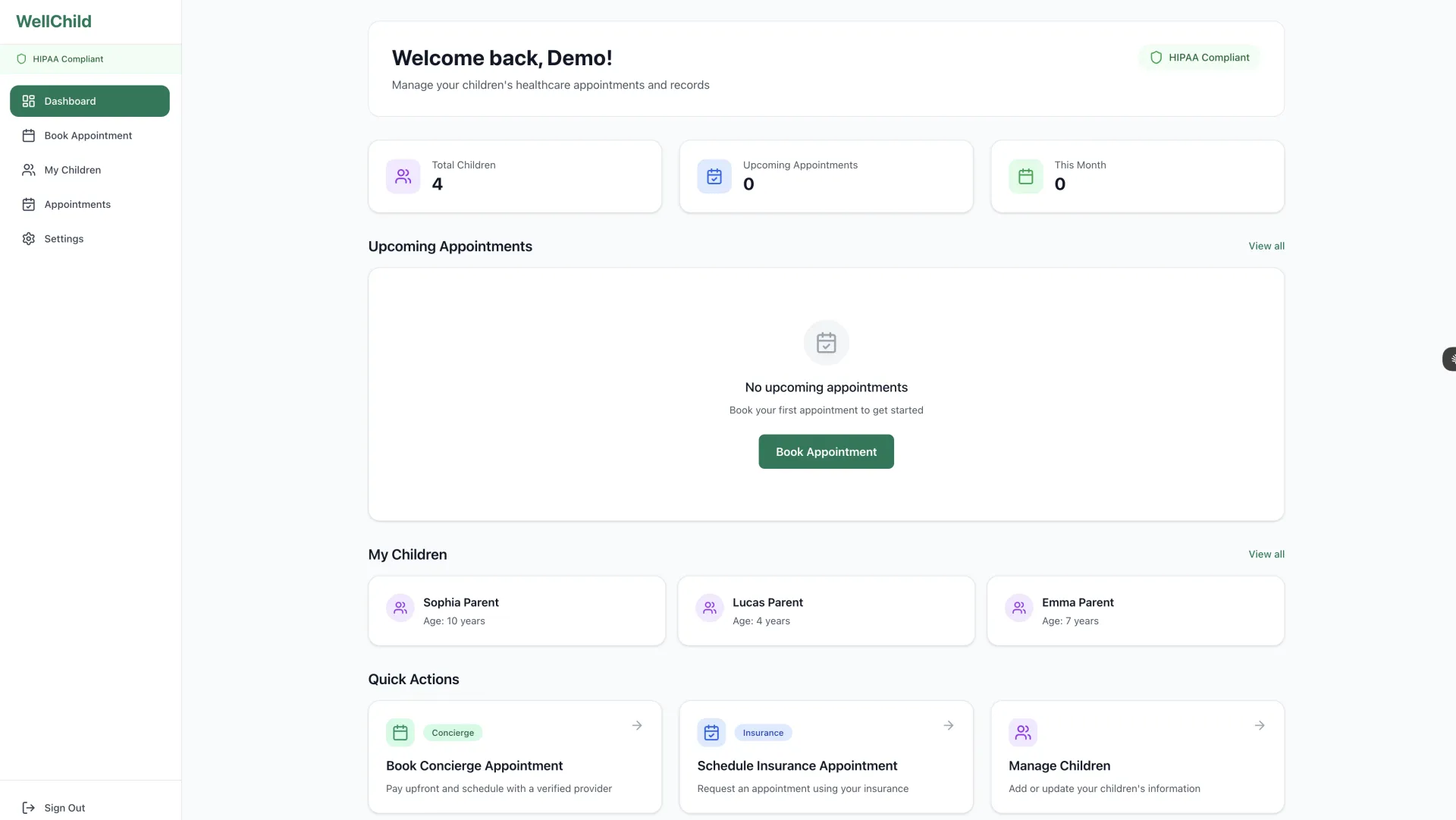
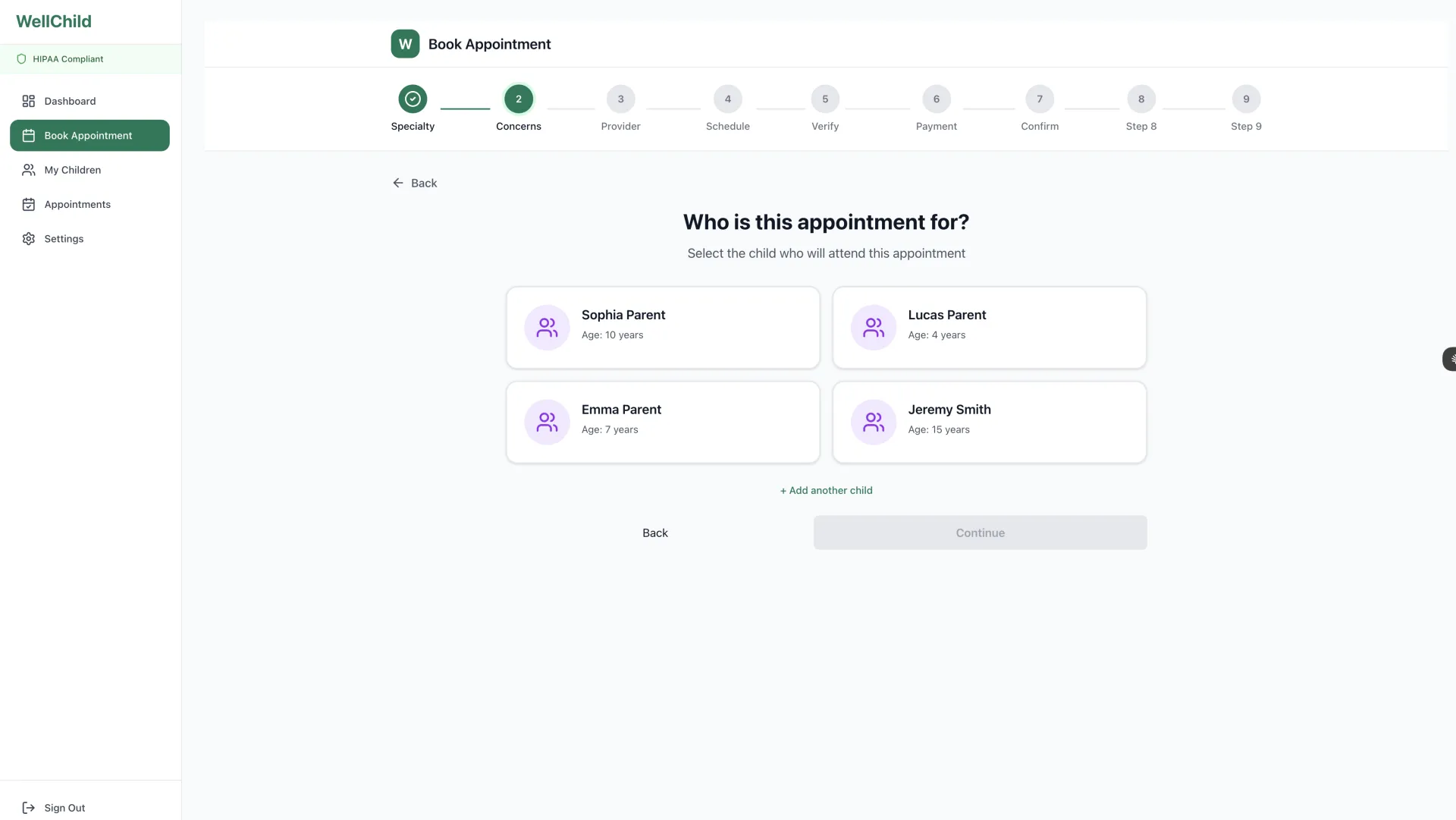
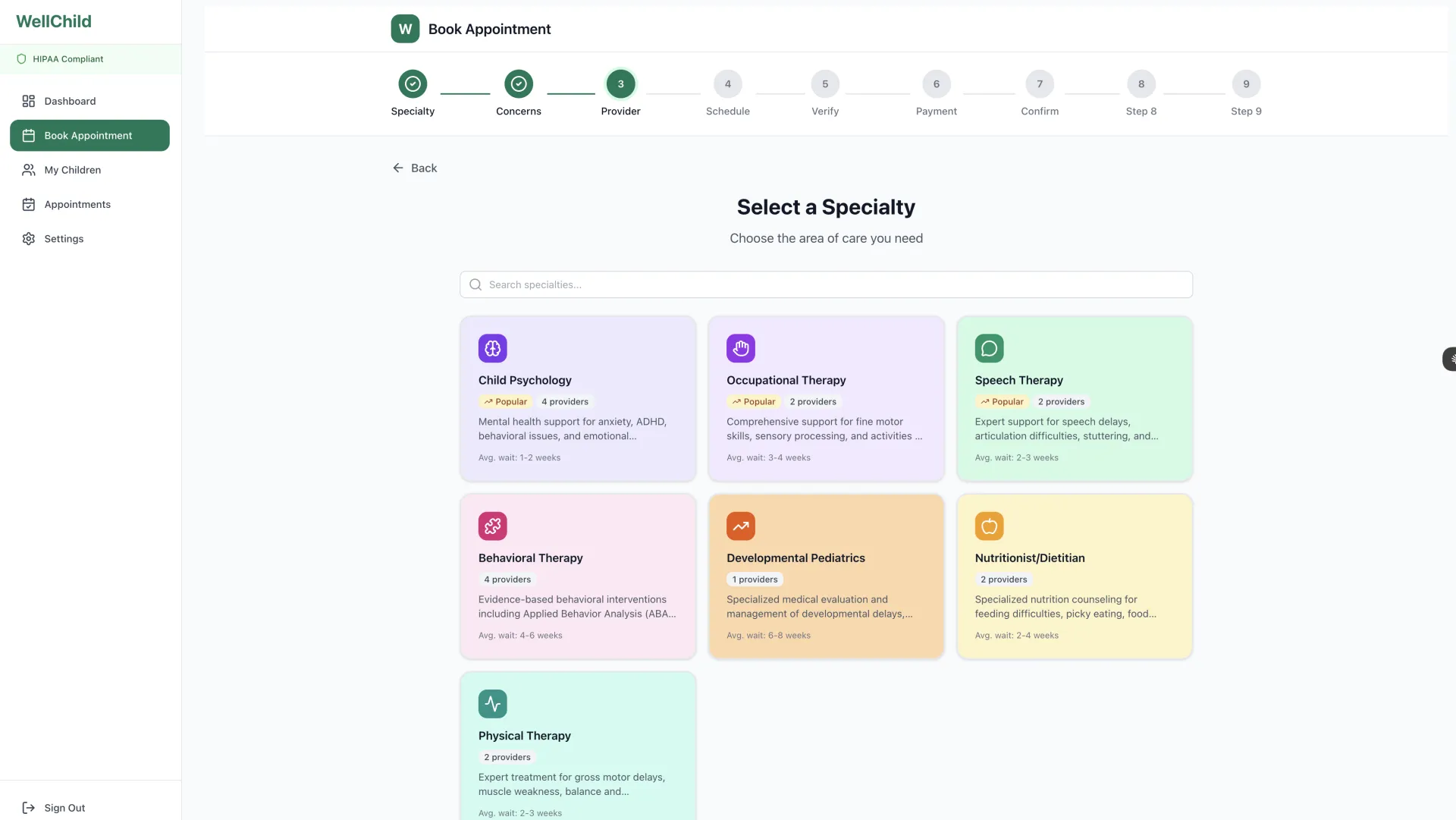
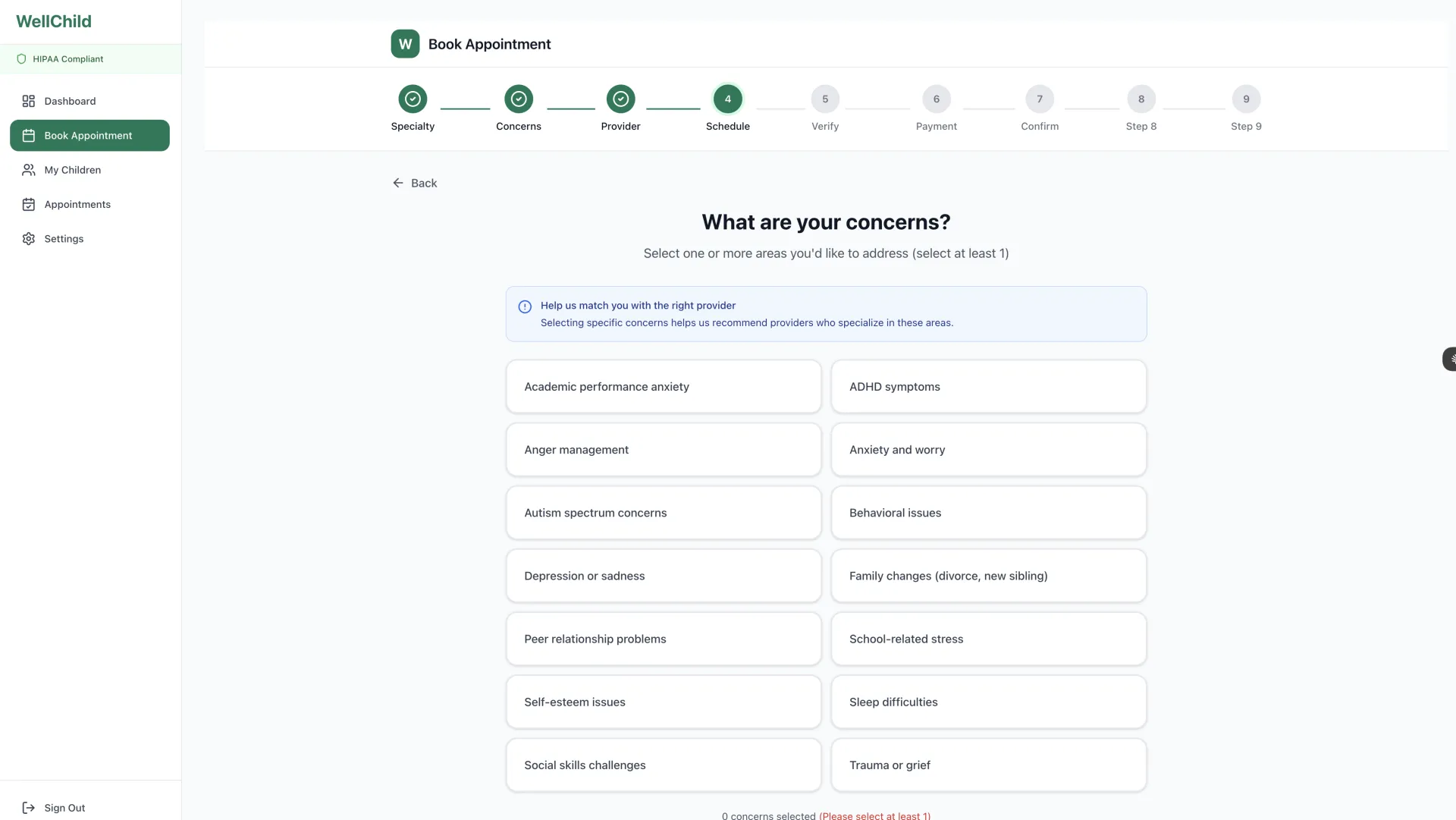
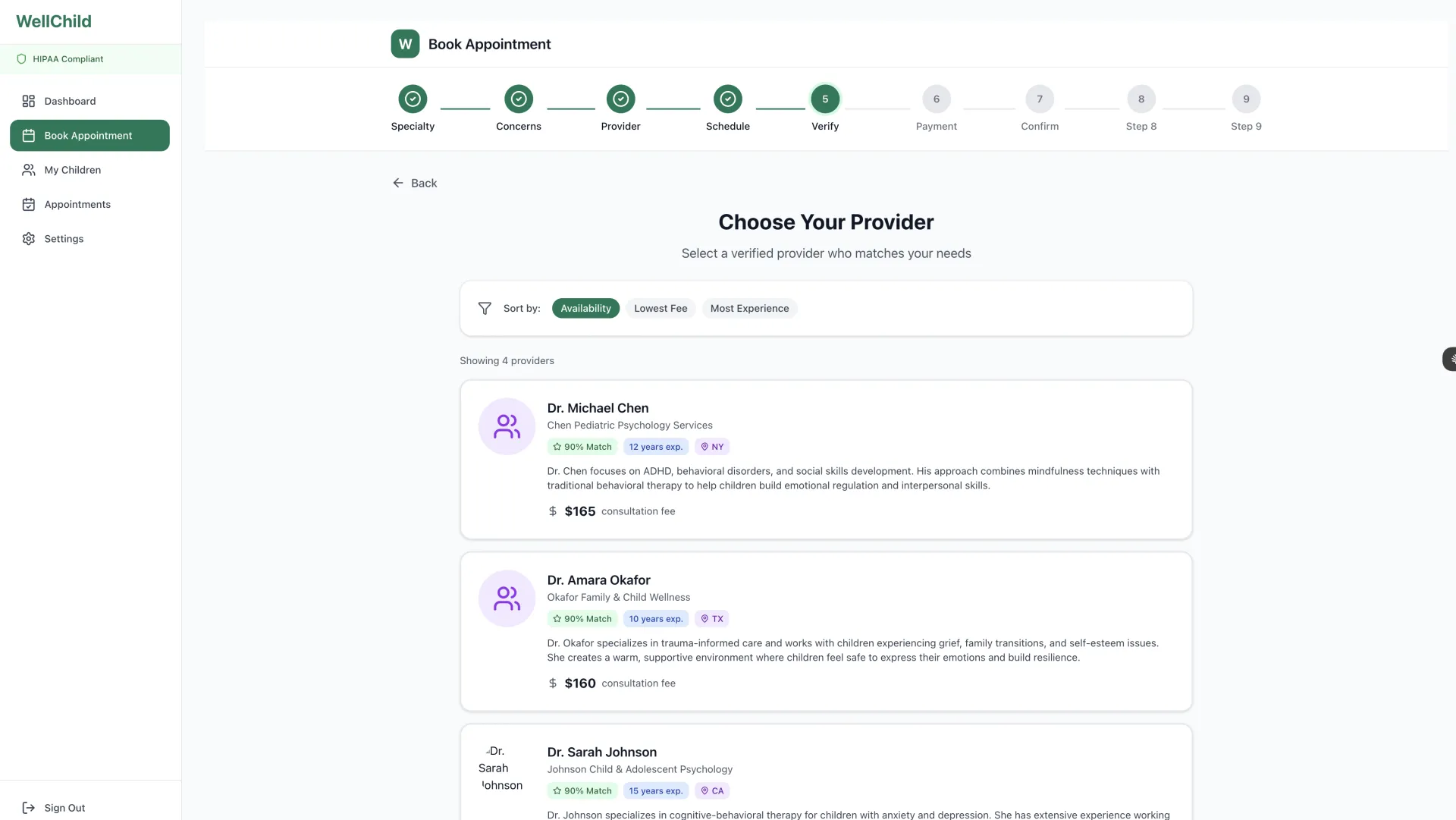
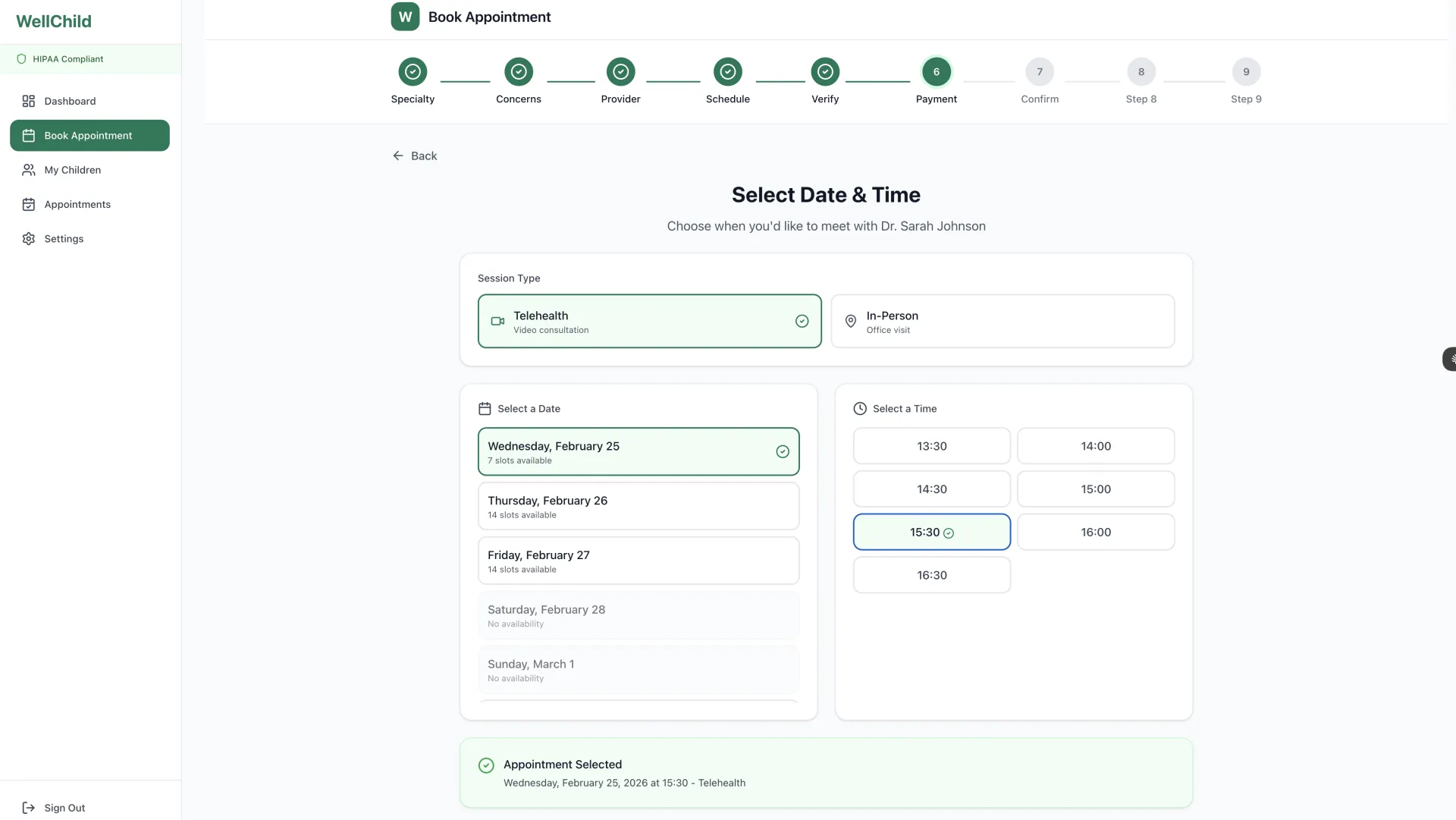
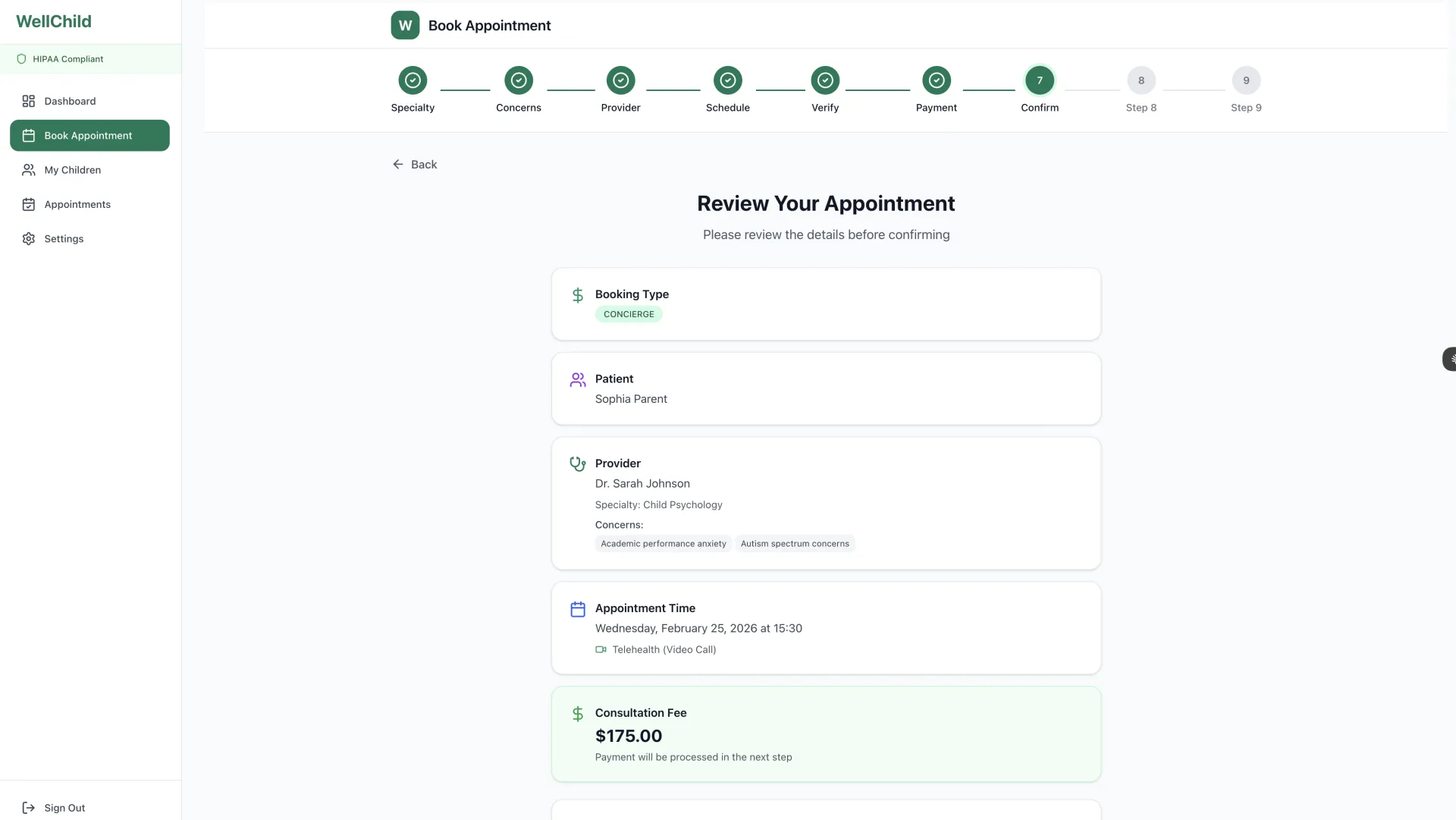
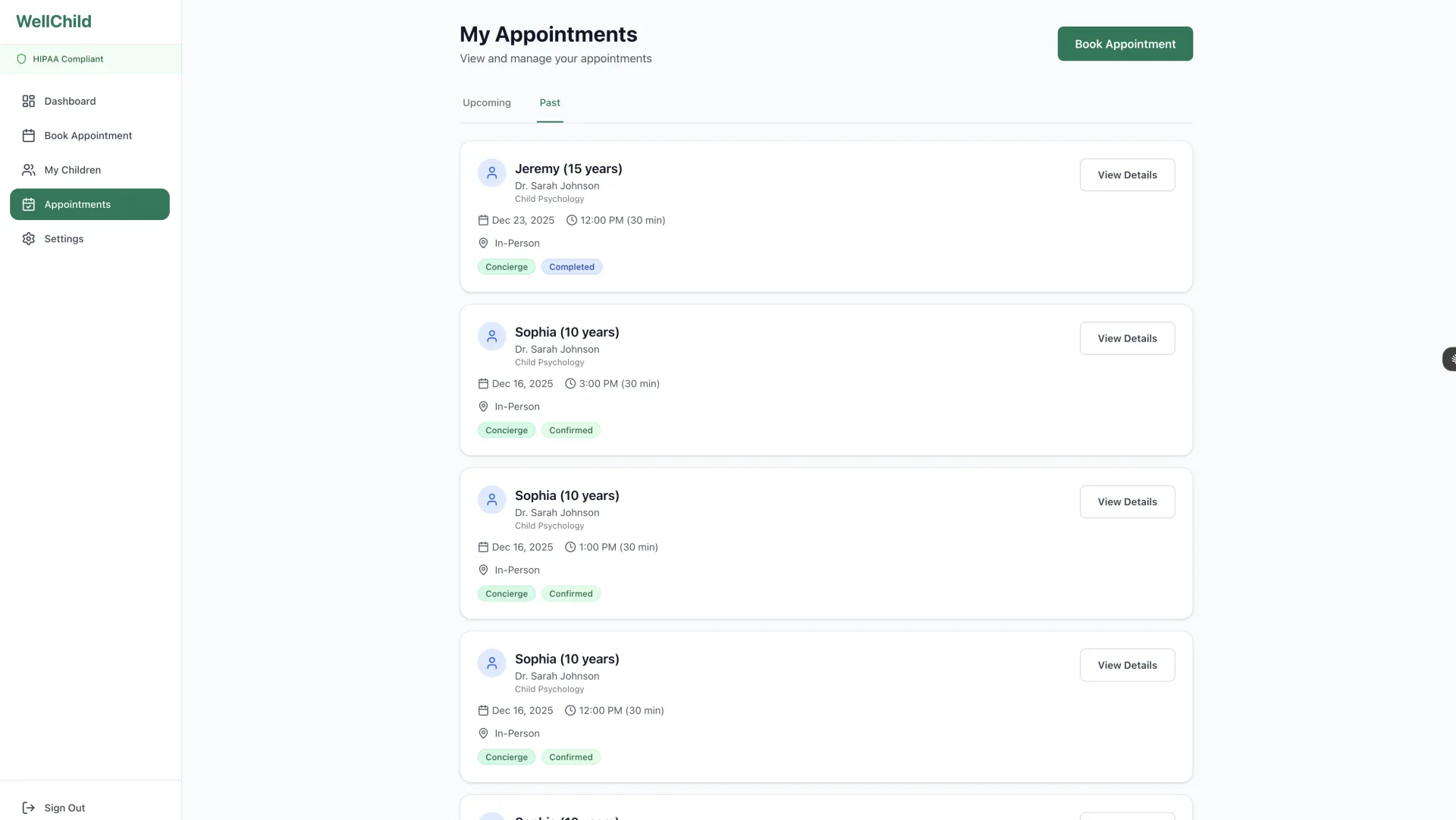
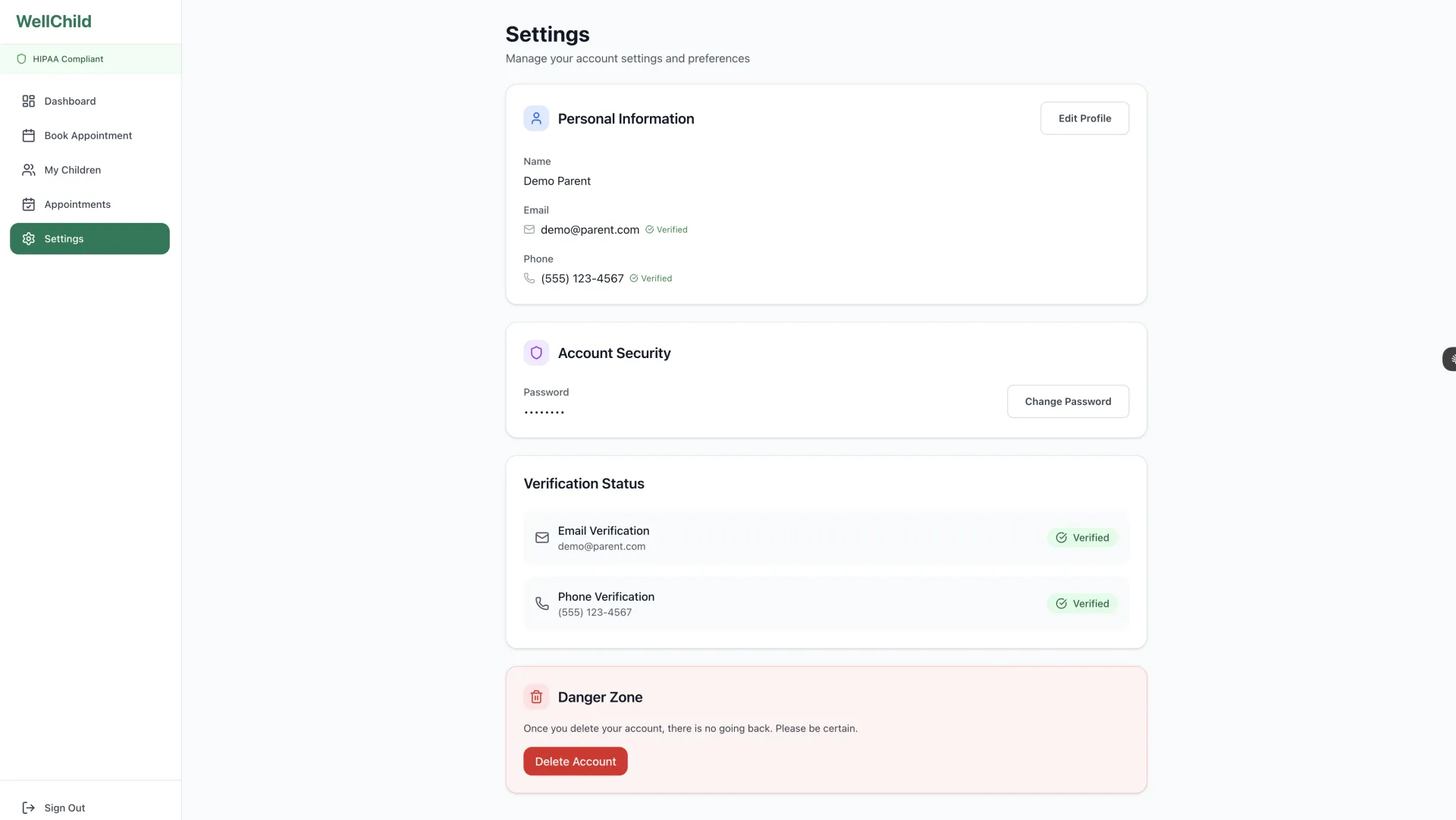
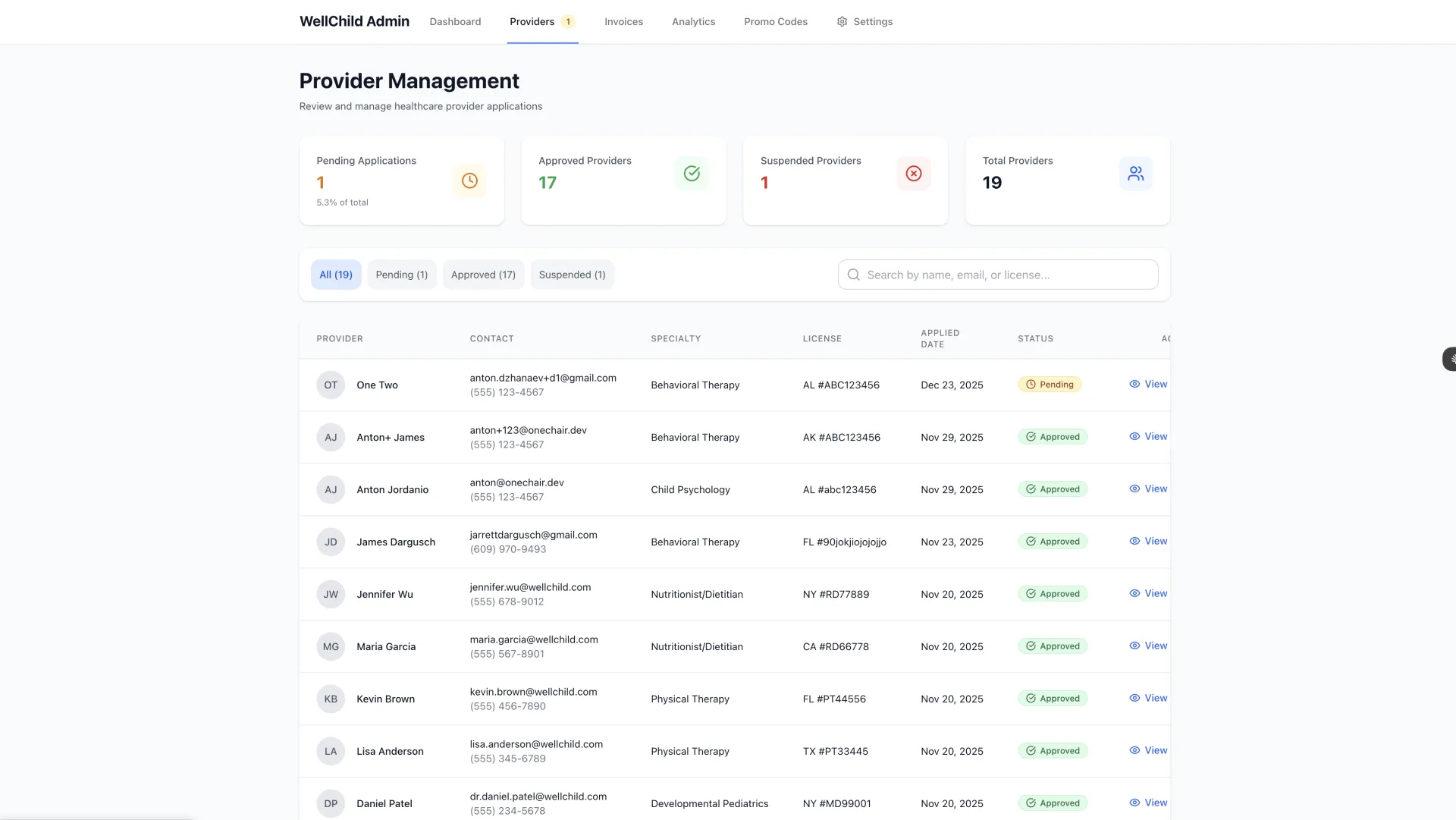
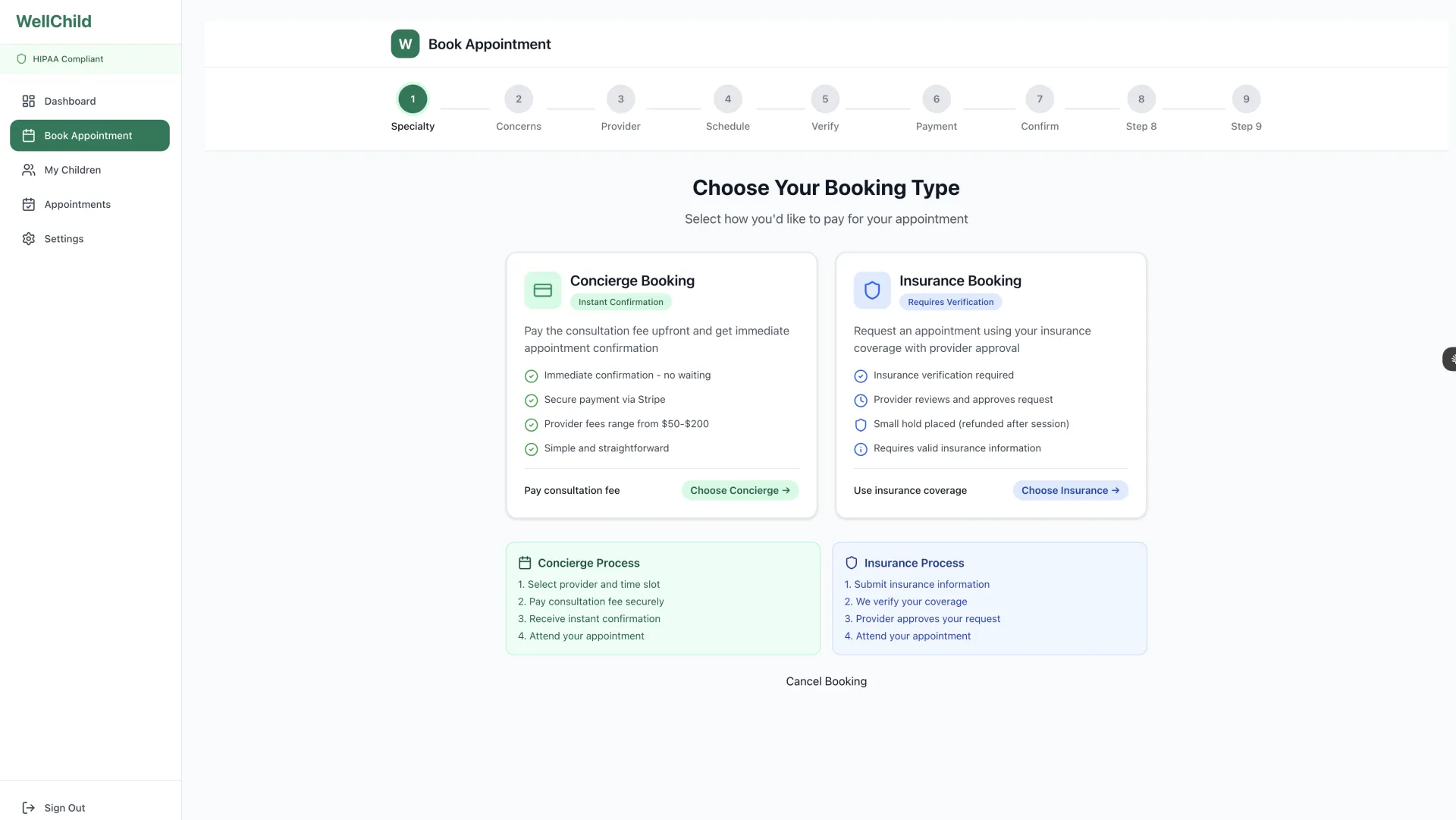
WellChild booking flow with concierge and insurance appointment options
HEALTHCARE

WELLCHILD

Same founder, same scope, two builds: traditional 2.5 months vs OneChair’s 27 hours

27 HRS BUILD TIME
~97% FASTER
116 SCREENS
HIPAA COMPLIANT

Michelle McGuinness, founder and CEO of WellChild, had already lived through traditional healthcare software development before she came to OneChair. The result is the most direct apples-to-apples comparison in OneChair’s portfolio: identical scope, identical founder, identical compliance requirements. 2.5 months versus 27 hours.

Tech Stack

Next.js 15 React 19 PostgreSQL Prisma Stripe AWS S3 NextAuth

Delivery Time

27 hours

Summary

Michelle McGuinness, founder and CEO of WellChild, had already lived through traditional healthcare software development before she came to OneChair. Six weeks with one developer, then 2.5 months with a full team — two developers, a designer, and a project manager — produced communication overhead, scope creep, and slow iterations. She wanted to test whether AI-orchestrated development could deliver the same HIPAA-compliant pediatric platform faster, against the same specification, with the same founder running the project.

The result is the most direct apples-to-apples comparison in OneChair’s portfolio: identical scope, identical founder, identical compliance requirements. 2.5 months versus 27 hours. 97% faster execution. A full HIPAA-compliant pediatric healthcare booking platform — three user portals, insurance verification, telehealth integration, Stripe payments, calendar syncing — delivered as a controlled experiment in AI-orchestrated development for healthcare.

This case study breaks down what those 27 hours actually contained, what “AI-built” means in a regulated industry, and why Michelle’s response after seeing the result was: “That is literally my platform.”

At a Glance

  • 27 hours total build time, against the same founder’s prior 2.5-month traditional attempt
  • ~97% faster than traditional development with an identical feature set
  • 67,077 lines of code across 367 TypeScript files
  • 116 screens delivered: 43 pages + 73 reusable components
  • 79 API endpoints, 16 database models, 9 external integrations
  • HIPAA-compliant from day one — built in, not bolted on
  • A+ code quality — zero technical debt, zero critical security vulnerabilities
The Challenge

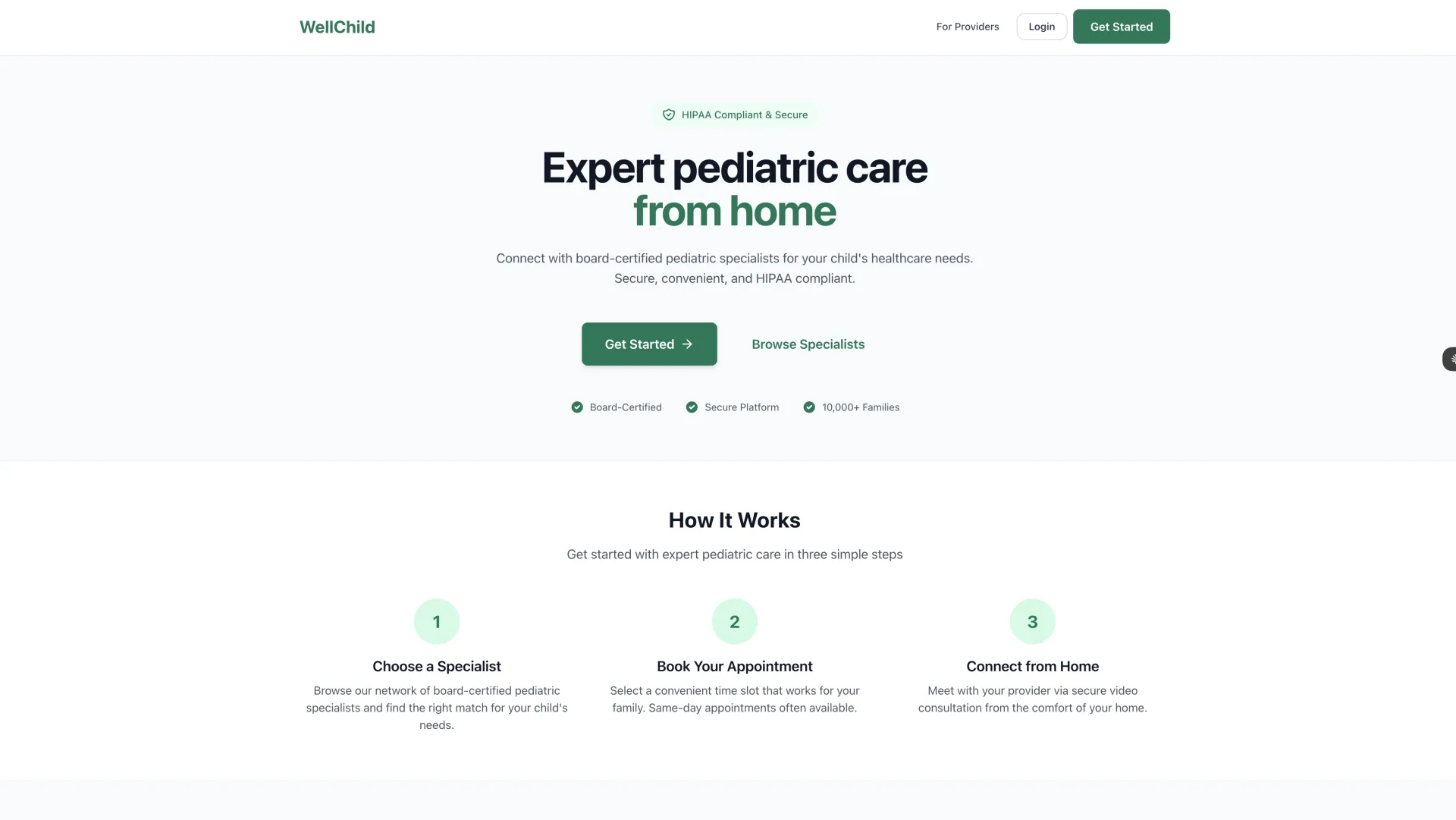
WellChild’s vision is structurally simple and operationally hard: connect parents to board-certified pediatric specialists through a HIPAA-compliant booking platform that handles the entire patient journey. Insurance verification. Provider onboarding with license checks. Scheduling across Google and Outlook calendars. Telehealth visits. Payment processing. Provider commission calculations. Admin analytics. All of it built to handle protected health information from the first commit.

Michelle had been through the conventional path:

  • First attempt: 6 weeks with one developer. Slow iterations, ambiguous progress, scope drift.
  • Second attempt: 2.5 months with a full team. Two developers, a designer, a project manager. Communication barriers, scope creep, slow iterations — the standard founder experience with a four-person agency arrangement.

Both attempts produced movement. Neither produced WellChild.

The technical scope sitting on the table was substantial:

  • Parent booking flows with insurance verification and approval workflows
  • Calendar syncing with Google and Outlook (with OAuth)
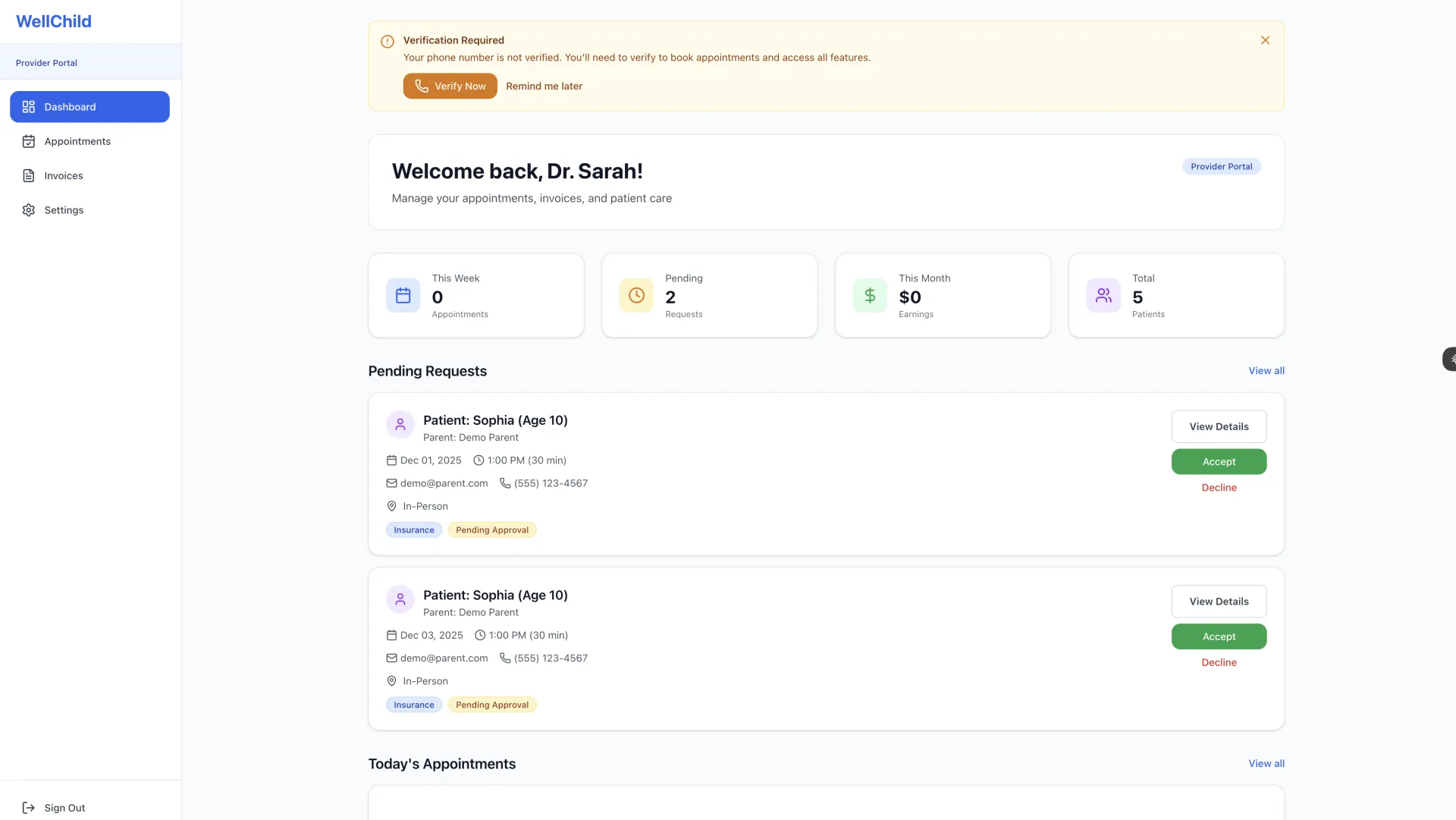
  • Provider onboarding with license verification and document handling
  • Patient record management with full HIPAA compliance
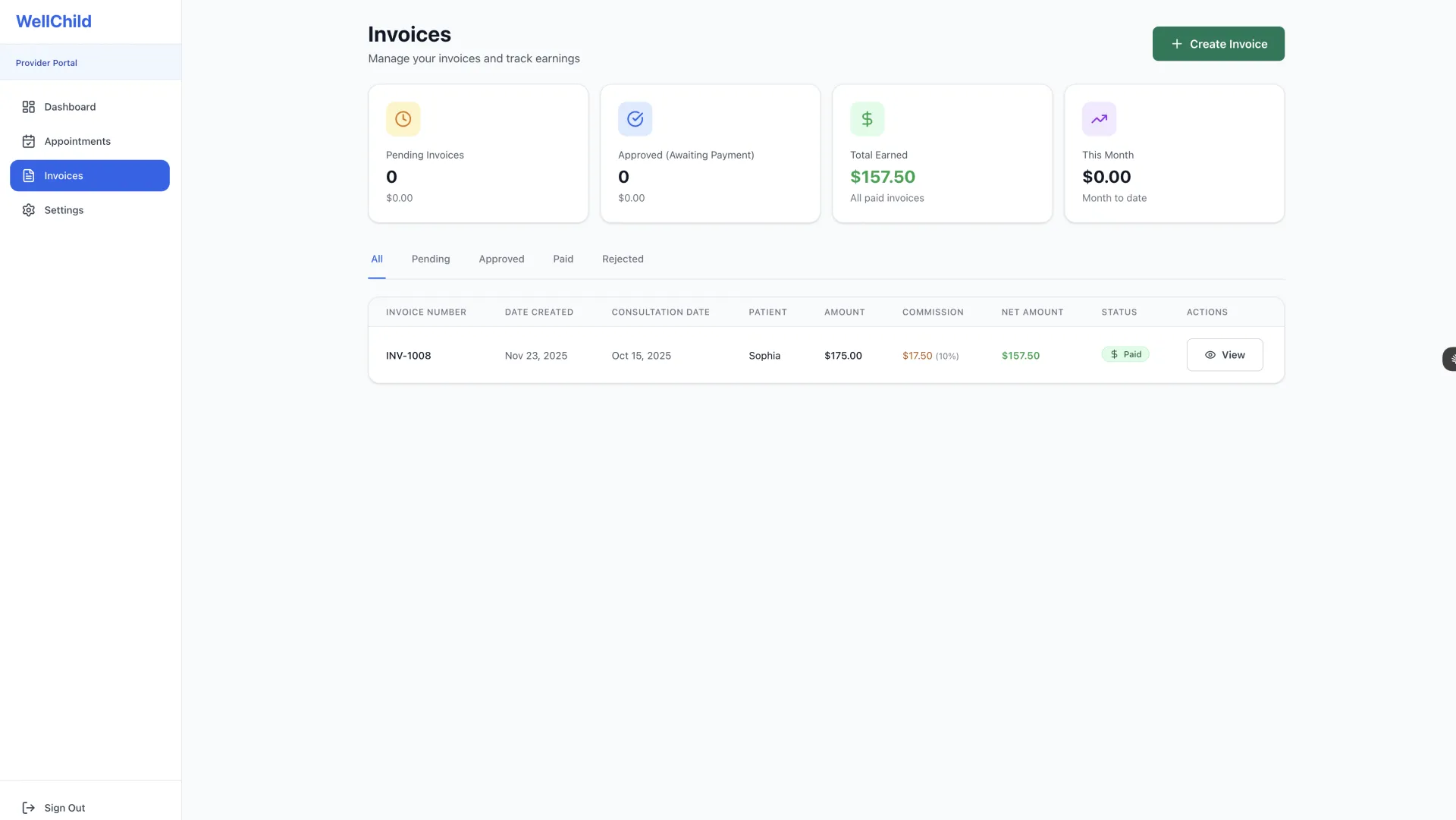
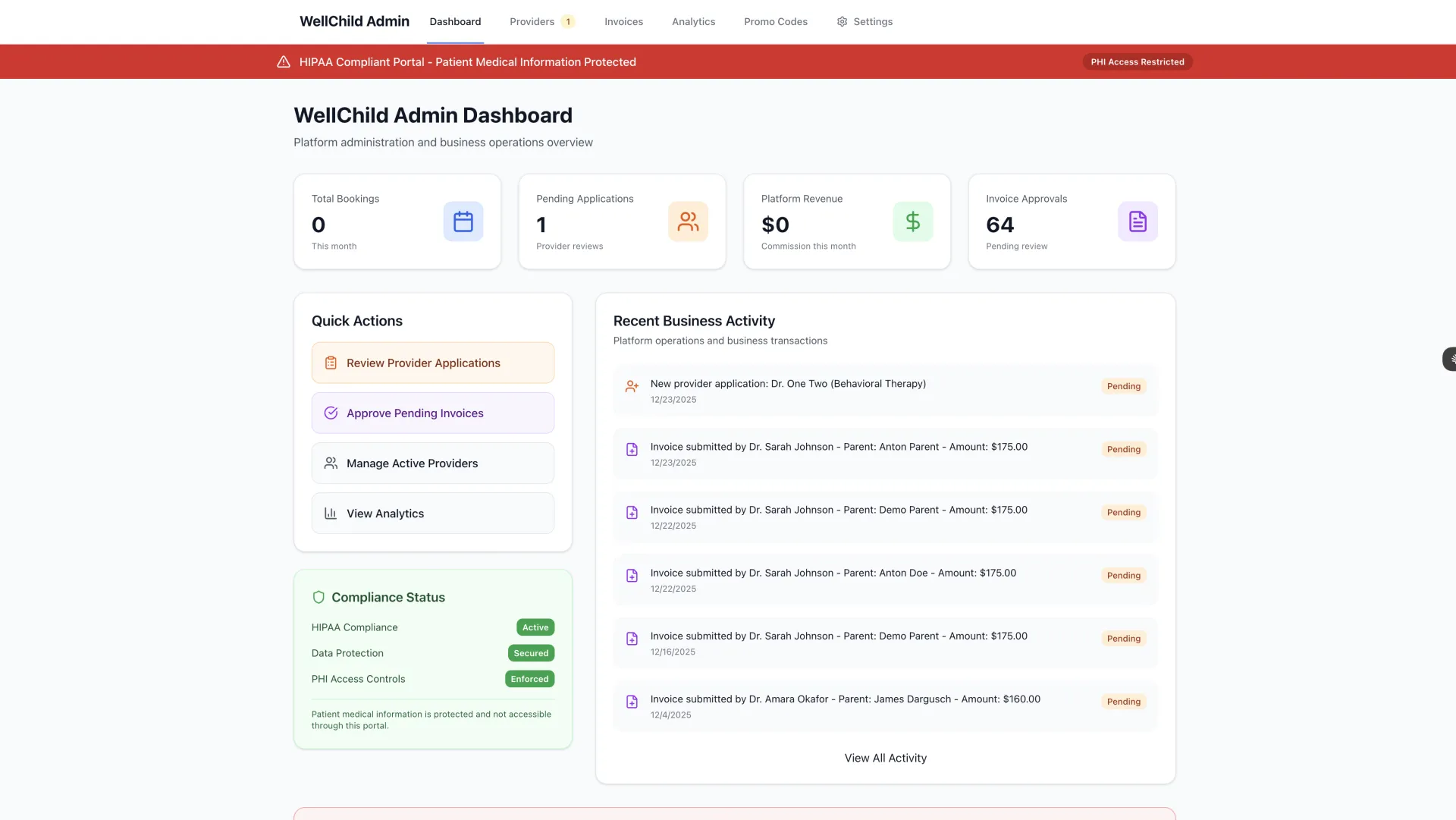
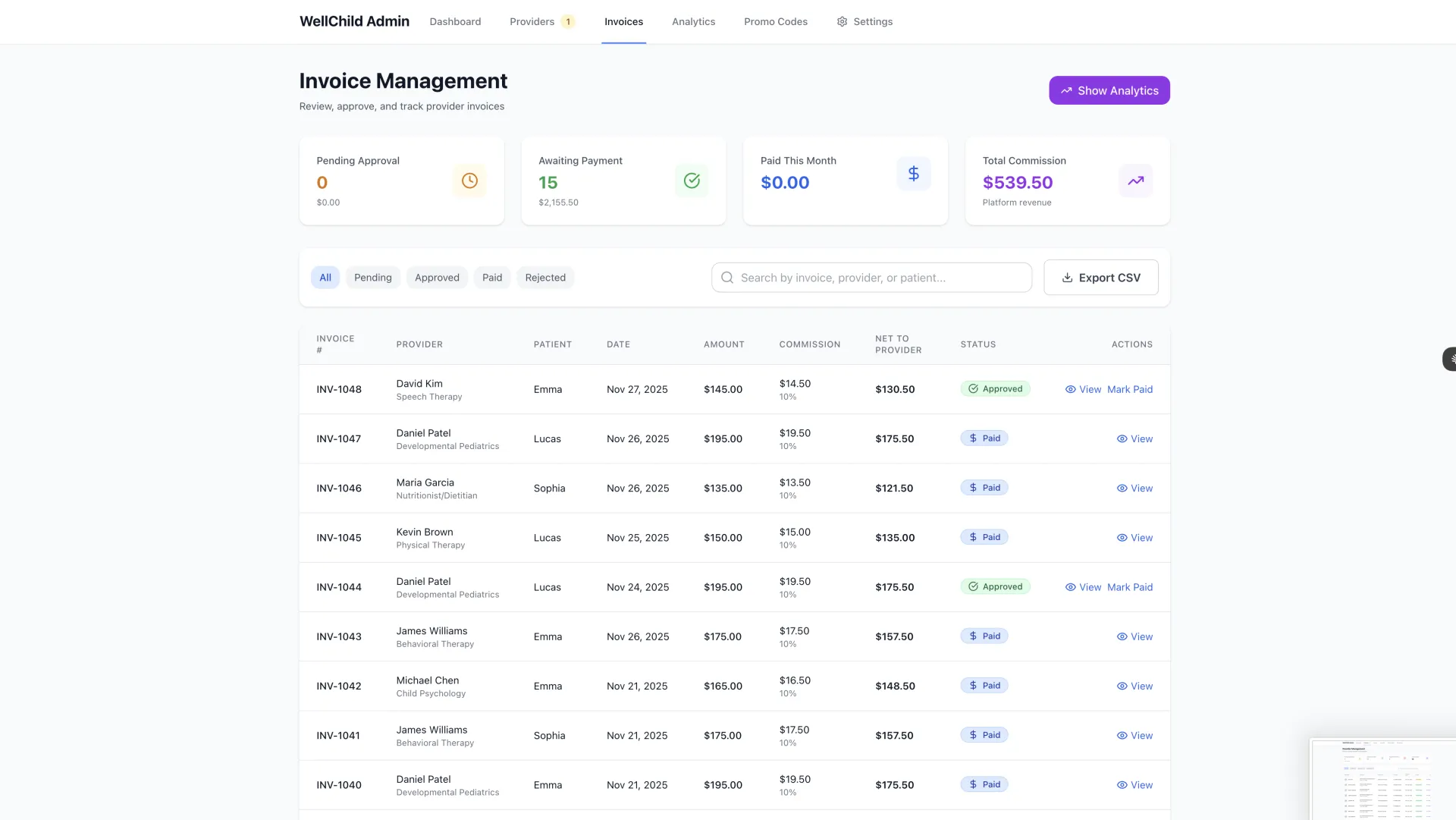
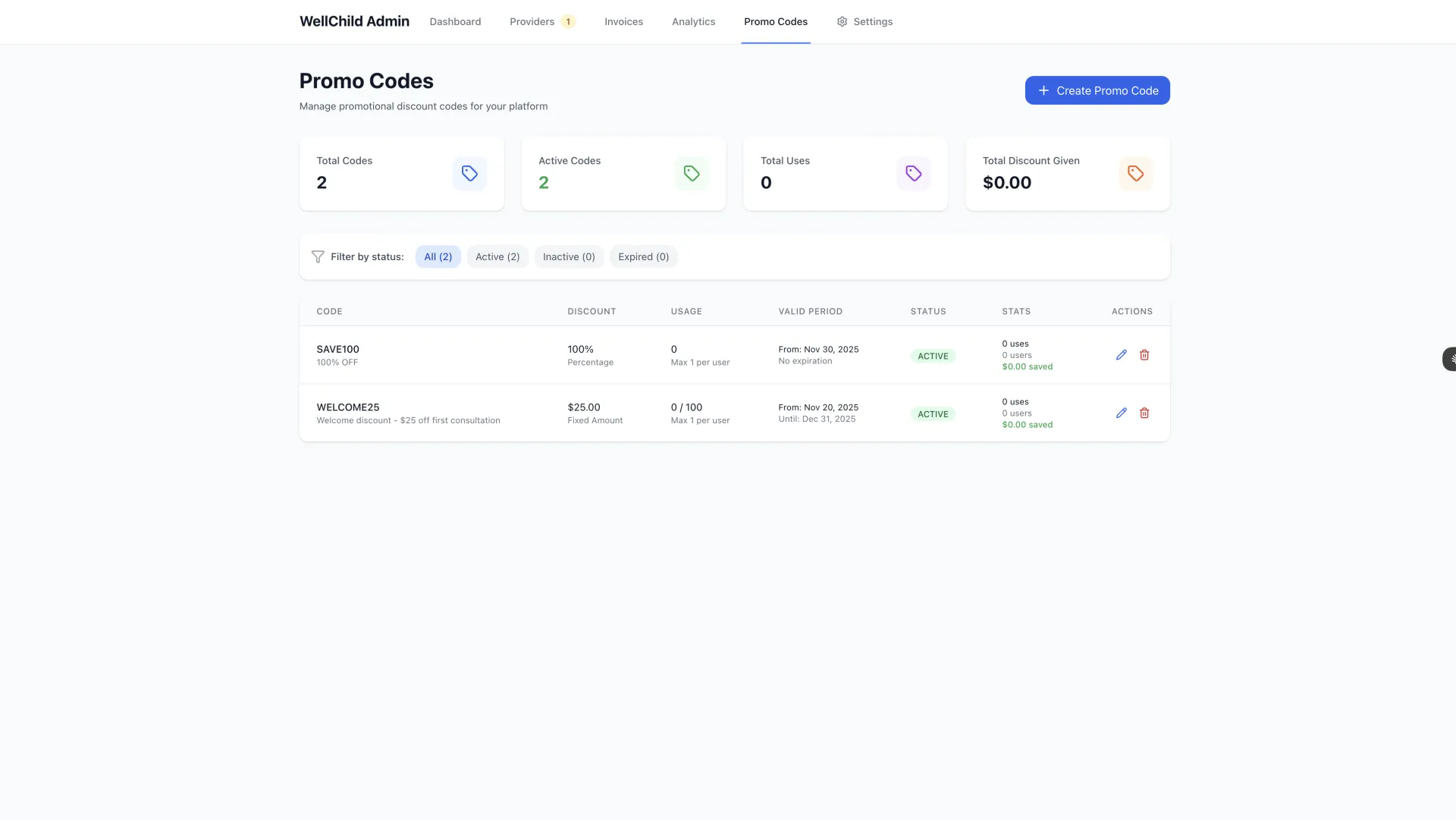
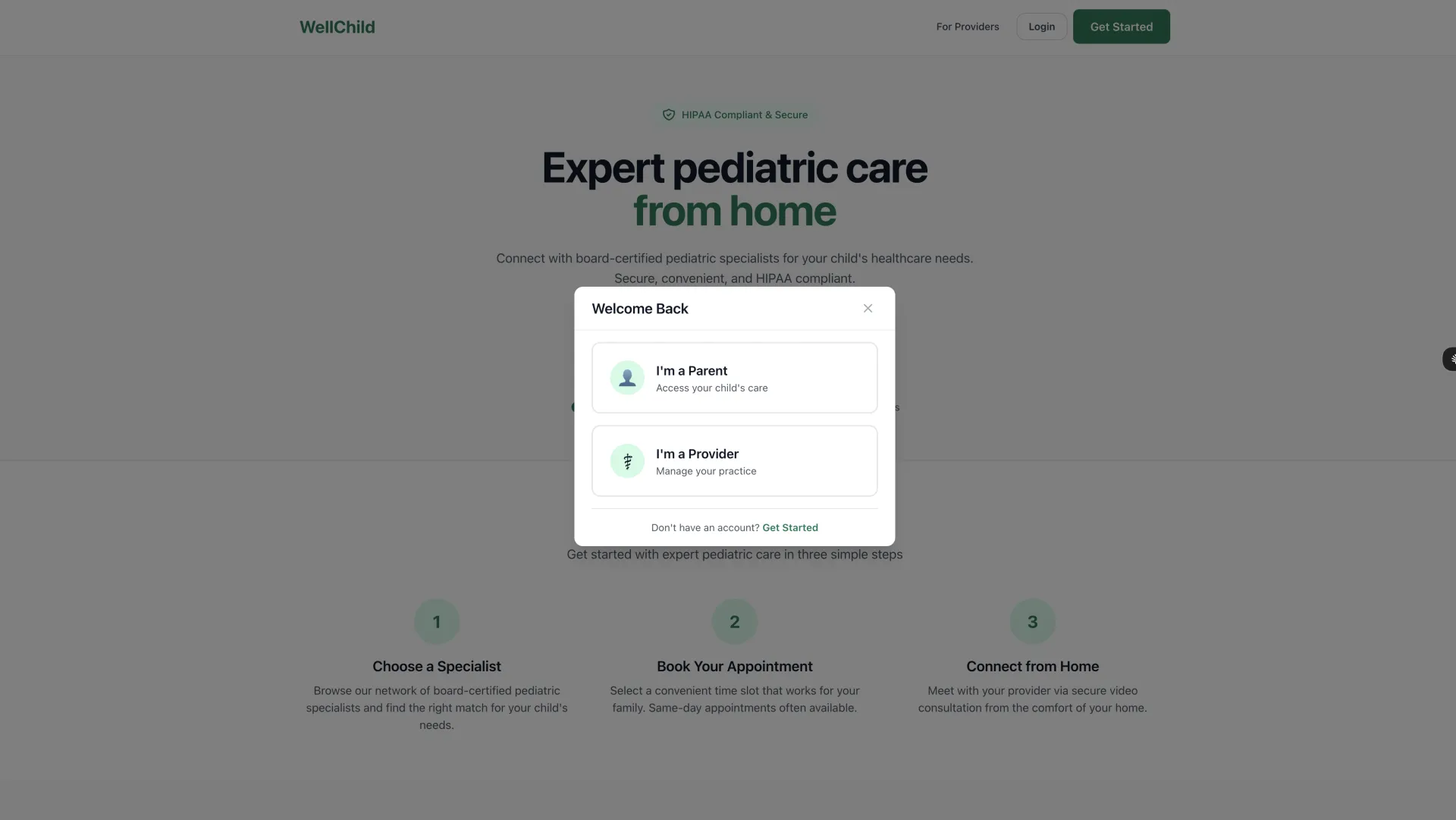
  • Three distinct user portals (parent, provider, admin) with role-based access
  • Stripe payment processing, AWS SES email, Twilio SMS, and invoice management
  • A complete admin portal with analytics and reporting

The traditional answer to “How long will this take?” was, demonstrably, 2.5 months and counting. The question Michelle wanted answered: could rapid MVP development through AI-orchestrated delivery produce the same scope, the same quality, the same compliance posture — measurably faster? Not as a marketing claim. As a controlled comparison. Same founder. Same spec. Same standard.

The Test

OneChair treated this as a methodology benchmark, not just a build. The prerequisite was a level of specification most projects never reach:

  • 42-page product specification
  • 15 user journey descriptions
  • 16 entity diagrams
  • Design system with 8 reference screens
  • HIPAA compliance requirements documented up front

That preparation matters. AI-orchestrated development accelerates execution; it doesn’t accelerate indecision. The discipline of arriving at the build with crisp specifications is part of what made the timeline possible.

Phase 1: AI Development (3 hours)

In three hours of orchestrated AI execution, the platform’s full surface area was generated:

  • Complete React 19 + Next.js 15 frontend with 43 pages and 73 reusable components
  • 79 RESTful API endpoints
  • PostgreSQL database with 16 models (Prisma ORM)
  • Google + Outlook calendar syncing with OAuth
  • Stripe payment integration
  • Email (AWS SES) and SMS (Twilio) notification systems
  • Insurance verification workflow
  • Patient file management with HIPAA compliance built into the architecture
  • 11 automated tests seeded for ongoing quality

Total output of the AI phase: 67,077 lines across 367 TypeScript files. Three hours.

Phase 2: Human Refinement (24 hours)

The honest part — and the part most “AI-built in X hours” claims hide. Twenty-four hours of experienced engineering work transformed the AI output into a production-ready platform:

  • Connected production API keys across nine external services
  • Handled real-world insurance edge cases the spec couldn’t anticipate
  • Refined provider commission calculations to match WellChild’s exact business logic
  • Fine-tuned mobile responsiveness across every flow
  • Added loading states, skeleton screens, and the polish that separates a working product from a shippable one

Total time: 27 hours. Total result: a fully functional, HIPAA-compliant pediatric healthcare platform.

What “AI-Built” Actually Means Here

It’s worth being precise about this, because the phrase “built by AI in 27 hours” invites reasonable skepticism — especially in healthcare.

AI didn’t replace the engineer. AI replaced the typing, scaffolding, and synchronization overhead that consumes most of a traditional development cycle. The 3-hour AI phase produced a structurally complete codebase from a clean specification. The 24-hour human phase made it production-ready: integration with live services, business logic refinement, UX polish, security review, edge-case handling.

The architect was human. The product decisions were human. The HIPAA architecture was designed by a human. What changed was the time spent translating decisions into code, which is where traditional development bleeds 90% of its calendar time.

That’s why Michelle’s reaction after seeing the result wasn’t “this is impressive AI output” — it was “that is literally my platform.” The methodology disappears when the output is right.

The Results

Speed Comparison

Traditional Build(Michelle’s prior attempts) OneChair AI-Orchestrated Build
Team 2 developers + designer + PM AI orchestration + 1 architect
Calendar time 2.5 months 27 working hours
Communication overhead Daily standups, slack churn, handoffs Single point of accountability
Scope creep Recurring None — spec-driven
Result Incomplete + full of bugs Full platform
Speed delta ~97% faster

What Was Delivered

  • 116 screens total (43 pages + 73 reusable components)
  • 79 API endpoints and 16 database models
  • Complete authentication system with role-based access control (RBAC)
  • 9 external service integrations (Stripe, Google Calendar, Outlook, AWS SES, Twilio, and more)
  • HIPAA compliance built into the architecture from day one
  • A+ TypeScript code quality, zero technical debt, zero critical security vulnerabilities
The Iteration Advantage (Where the Real Story Is)

The 27-hour initial build is the headline, but the more important number for any founder choosing a long-term development partner is what comes after the launch:

New Feature Traditional Timeline OneChair Timeline
Add a new pediatric specialty 2 weeks 2 hours
Add a new user portal 1 month 4 hours
Add a new payment integration 2 weeks 3 hours

This is the difference between building a product and operating a product. Most founders don’t think about post-launch velocity when they’re picking a developer — and then spend the next two years paying for that oversight in slow shipping cycles.

WellChild’s iteration velocity means new specialties, new portals, and new integrations ship in hours, not quarters. That’s not a faster build — it’s a structurally different operating model.

Why This Worked: A Comparison

Four ways to build a regulated healthcare product — and why only one delivered a production platform in 27 hours:

Traditional Healthcare Agency DIY AI Tools(Lovable, Replit, Bolt) OneChair AI-Orchestrated Build
Timeline (full platform) 2–4 months Demo in hours; production never 27 hours
HIPAA compliance Yes, with weeks of scoping No realistic path Built into the architecture
Real third-party integrations Yes, slowly Limited, brittle 9 integrations live
RBAC + multi-portal Yes Limited 3 portals with full RBAC
Production code quality Variable Prototype-grade A+ TypeScript, zero critical vulns
Communication overhead High (standups, PMs, handoffs) Low (you build it) Minimal (single architect)
Post-launch iteration Weeks per feature Doesn’t scale Hours per feature
Best fit Large, regulated, slow-changing Internal prototypes Real healthcare products, fast

That is literally my platform. After trying it, I realized how much faster I could test and roll out new features using OneChair. Having a way to build and validate features quickly is a total game-changer for me.

— Michelle McGuinness, Founder & CEO, WellChild

Key Takeaways

For healthcare founders evaluating dev partners. HIPAA compliance does not have to slow you down. When compliance is treated as an architectural property — built in at the foundation rather than retrofitted at the end — a production-ready healthcare platform ships in days, not months. The 27-hour WellChild build included full HIPAA architecture, RBAC, audit-ready data handling, and 9 third-party integrations. None of that was added later. See how the same pattern applies to another HIPAA-compliant healthcare build.

For founders managing dev teams. Communication barriers, scope creep, and developer transitions are not features of software development. They’re symptoms of a team coordination problem that AI orchestration largely eliminates. You stop managing contractors and start reviewing deliverables. That shift alone reclaims the founder time that’s actually scarce.

For startup velocity. A 97% faster build is a multiplier on every downstream decision. When you can test 30× more product ideas in the same calendar window, “find product-market fit” stops being a runway problem and becomes a learning-rate problem. The teams that internalize this win the next cycle.

For the long game. The 27 hours matter. The 2 hours per new specialty matter more. Pick a development partner the way you’d pick a long-term operating system, not the way you’d pick a one-off contractor.

Frequently Asked Questions

Can a HIPAA-compliant healthcare platform really be built in 27 hours?

Yes — under specific conditions. The platform needs sharp specifications going in (WellChild had a 42-page spec, 15 user journeys, 16 entity diagrams, and 8 reference designs). It needs experienced architectural oversight. And it needs a clean compliance scope defined up front. Under those conditions, AI-orchestrated development delivered 67,000+ lines of production-grade TypeScript across 116 screens, 79 API endpoints, and 9 integrations in the 27-hour window. The work didn’t compress the thinking — it compressed the translation of thinking into code.

How does OneChair handle HIPAA compliance in a fast build?

HIPAA is scoped at the architecture phase, not retrofitted at the end. Role-based access control, encrypted data handling, audit-ready logging, secure document storage (AWS S3), and proper separation of PHI from business data are all designed into the foundation. That’s why a 27-hour build can include real HIPAA architecture rather than a 27-hour build that pretends to.

Was the platform really built by AI, or by humans using AI?

Both, in defined phases. The 3-hour AI phase generated the structural codebase from the specification. The 24-hour human phase connected production APIs, refined business logic, handled edge cases, polished UX, and verified compliance posture. The architect was human throughout. The product decisions were human. What changed is the time spent typing rather than the time spent thinking.

Why did this work when Michelle’s two prior attempts didn’t?

Two reasons. First, Michelle did the specification work properly before the build — that work was scattered across her prior attempts. Second, AI-orchestrated development collapsed the team coordination overhead that consumes most of a traditional build’s calendar. Two developers, a designer, and a PM produce communication churn; one architect orchestrating AI execution produces output.

What tech stack powers WellChild?

Next.js 15 and React 19 on the frontend, PostgreSQL with Prisma ORM for the data layer, NextAuth for authentication, Stripe for payments, AWS S3 for secure document storage, plus Google Calendar, Outlook, AWS SES, and Twilio for the integrations layer. Modern, production-proven choices — speed came from how the work was orchestrated, not from exotic tooling.

Is OneChair available for engagements like this?

Yes. OneChair partners with healthcare founders, regulated-industry teams, and startups where speed-to-market is a competitive lever. Book a scope call to find out whether your build is a fit.

READY TO RUN THE SAME TEST FOR YOUR PRODUCT?

If you’ve been quoted months for a build that should take weeks, get a free scope call and find out whether AI-orchestrated development is the right fit for your project.

BOOK A SCOPE CALL