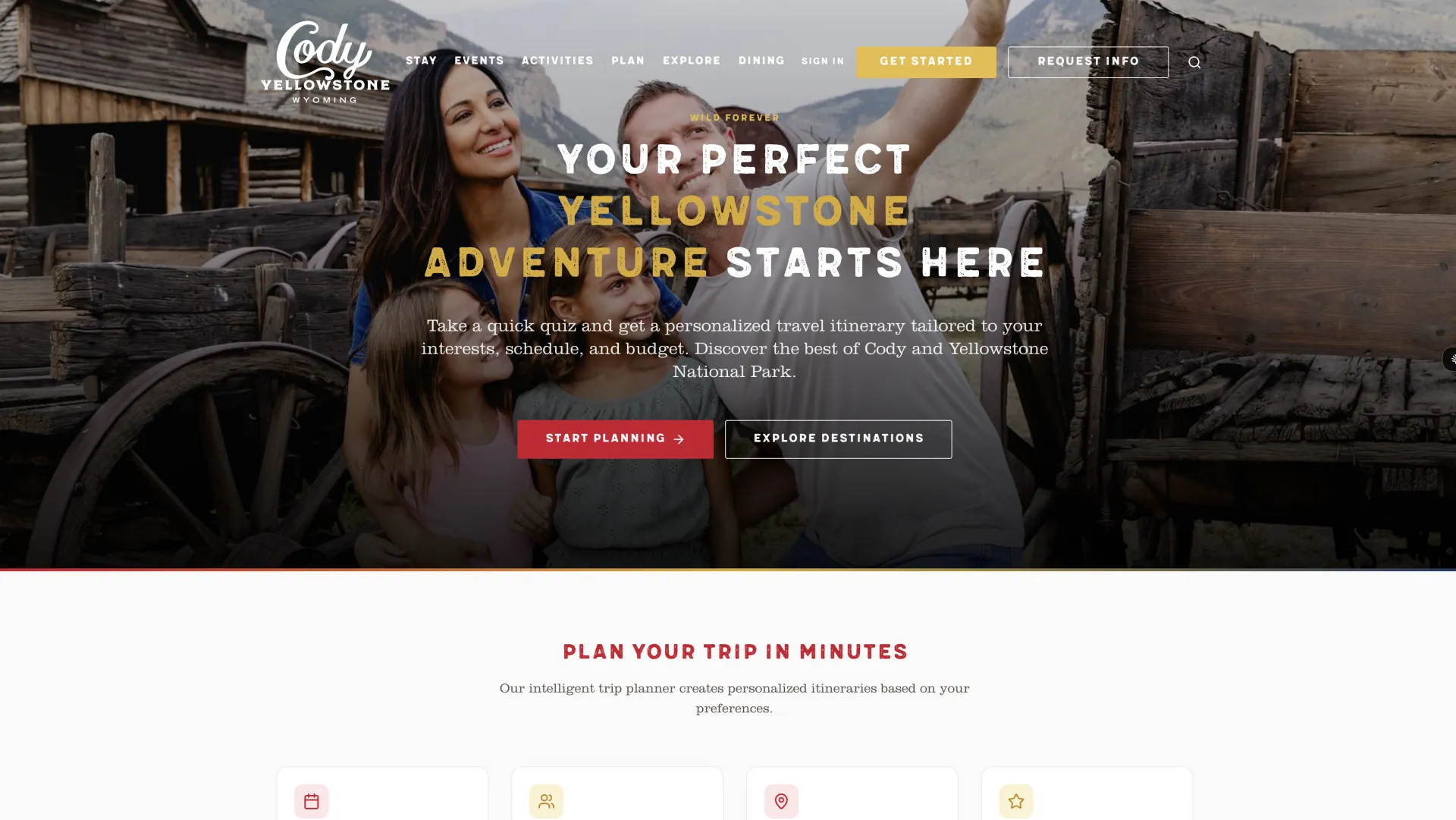
Destination marketing organizations (DMOs) sit on top of a quietly painful problem: the gap between travel inspiration and travel planning is where their conversion funnel dies. A potential visitor lands on a beautifully shot DMO website, gets excited about Yellowstone, opens fifteen browser tabs to figure out where to stay and what to do, and then closes them all when planning starts to feel like work. The traveler bounces. The region loses the visit. The DMO’s marketing spend underperforms.
Most DMOs respond with more content — more blog posts, more itinerary guides, more downloadable PDFs. That’s the brochure-and-blog model, and it’s what visitors have been ignoring for a decade.
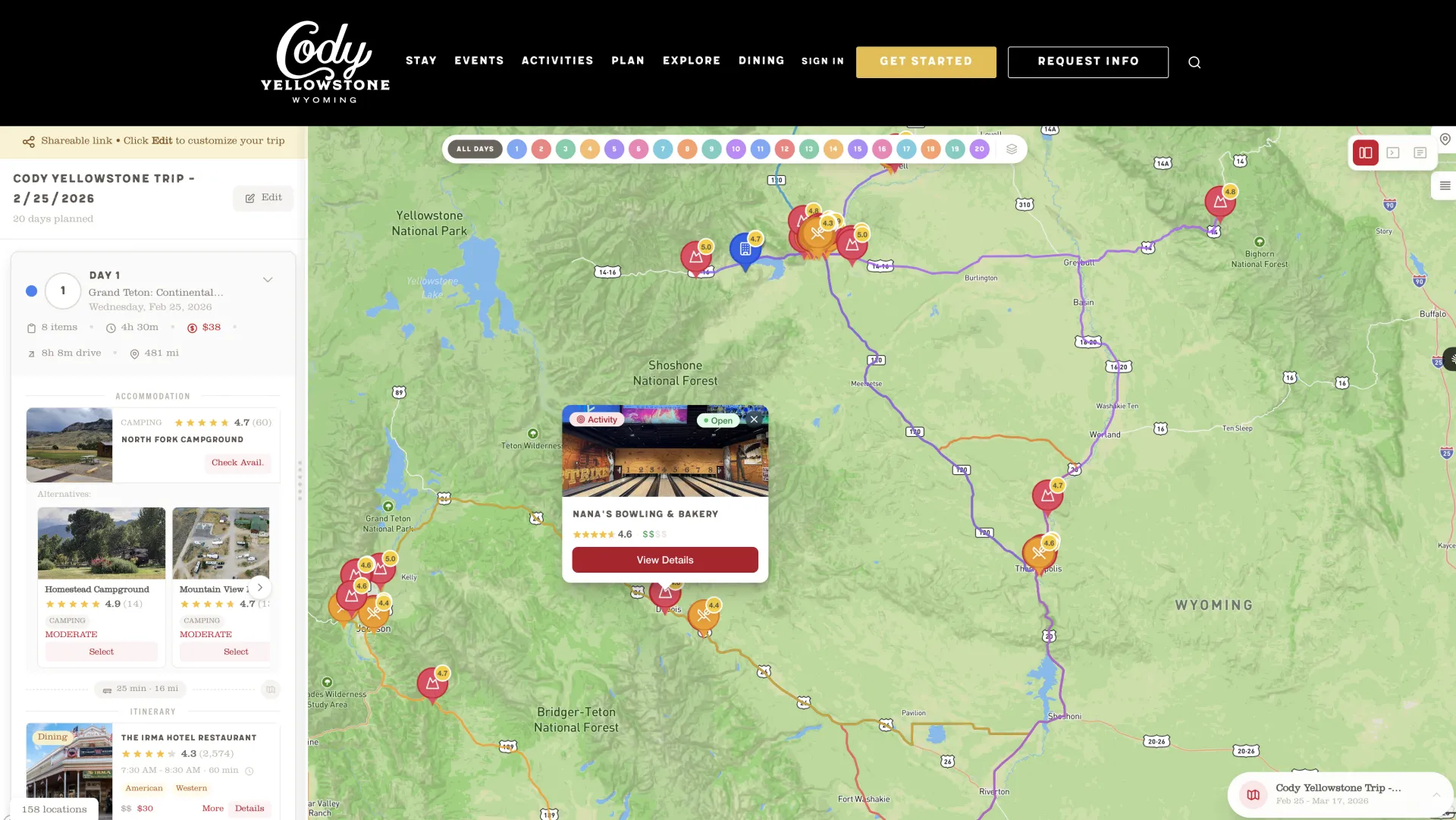
Cody Yellowstone wanted to test a different hypothesis: that an AI-powered trip planner could close the inspiration-to-planning gap directly, on the DMO’s own domain, without sending visitors off to OTAs or third-party planners. The brief specifically called for:
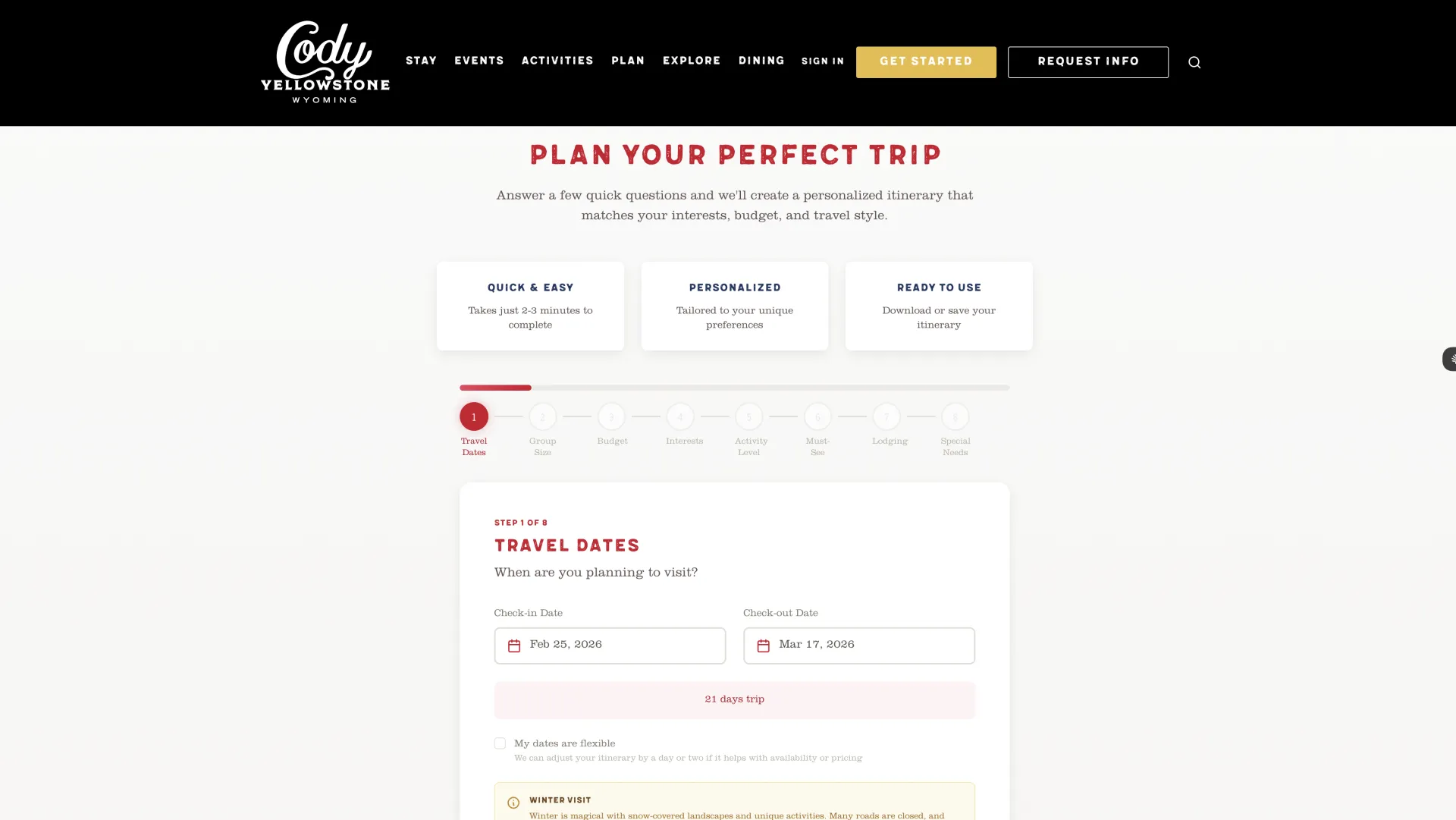
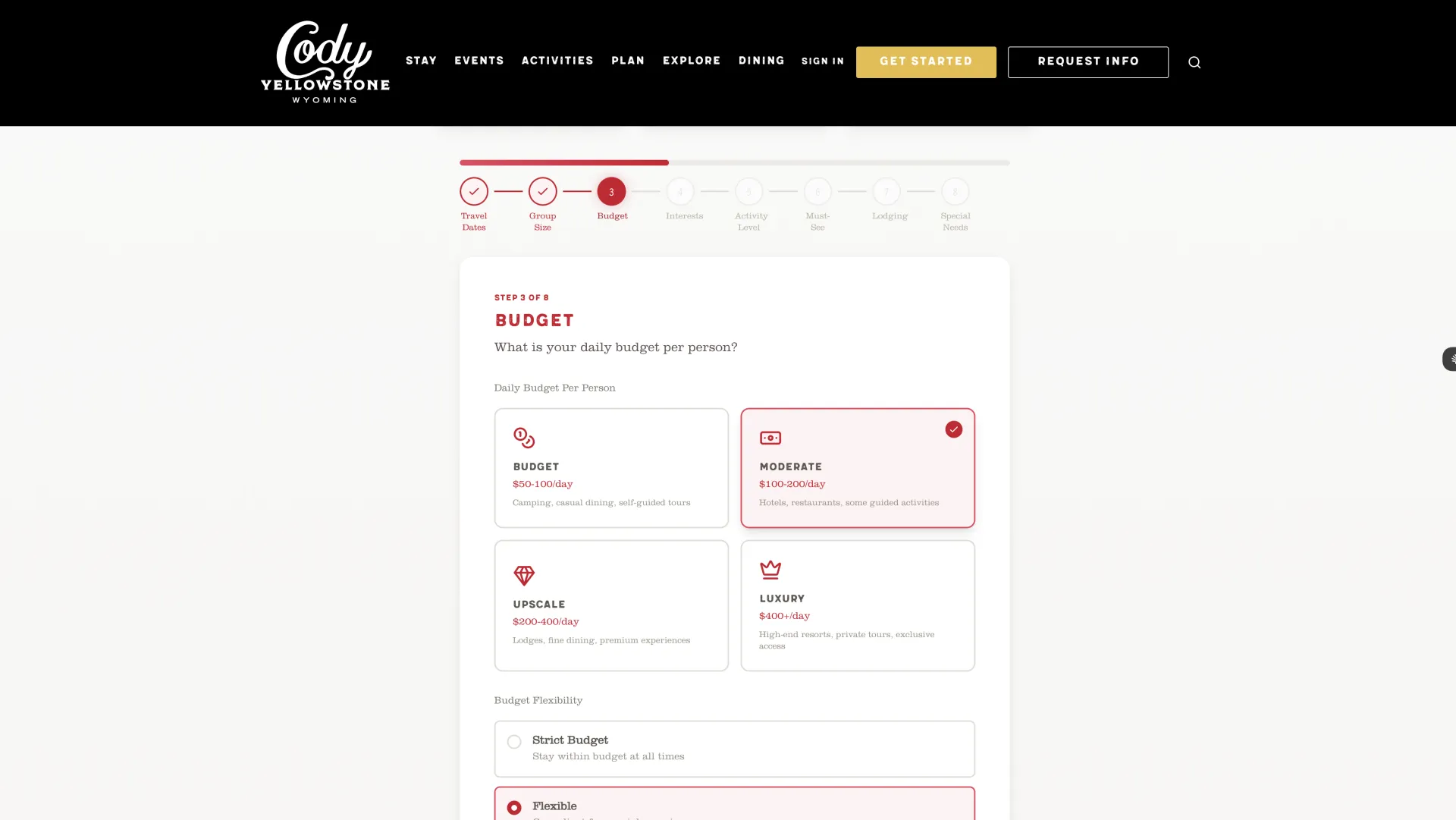
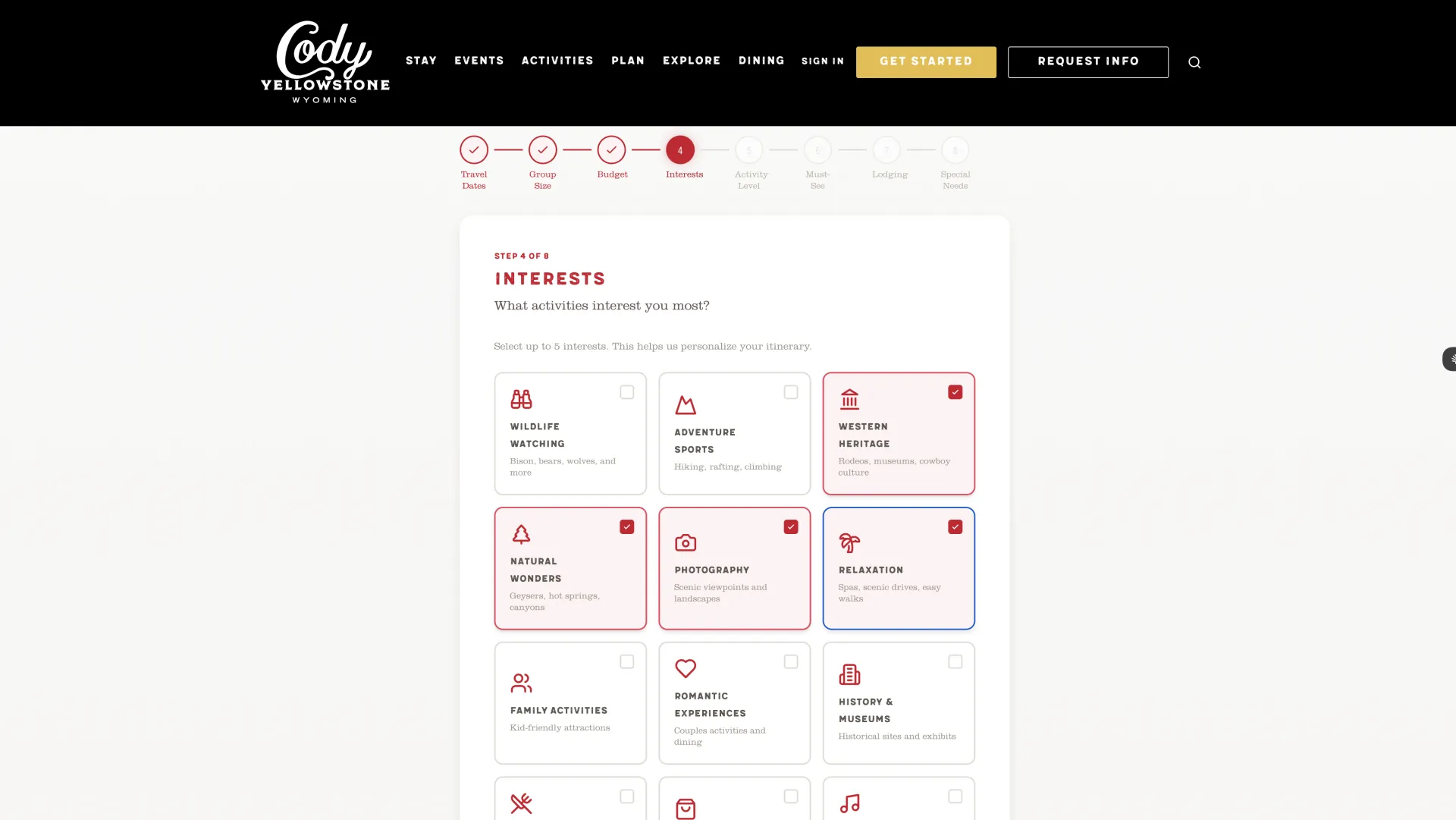
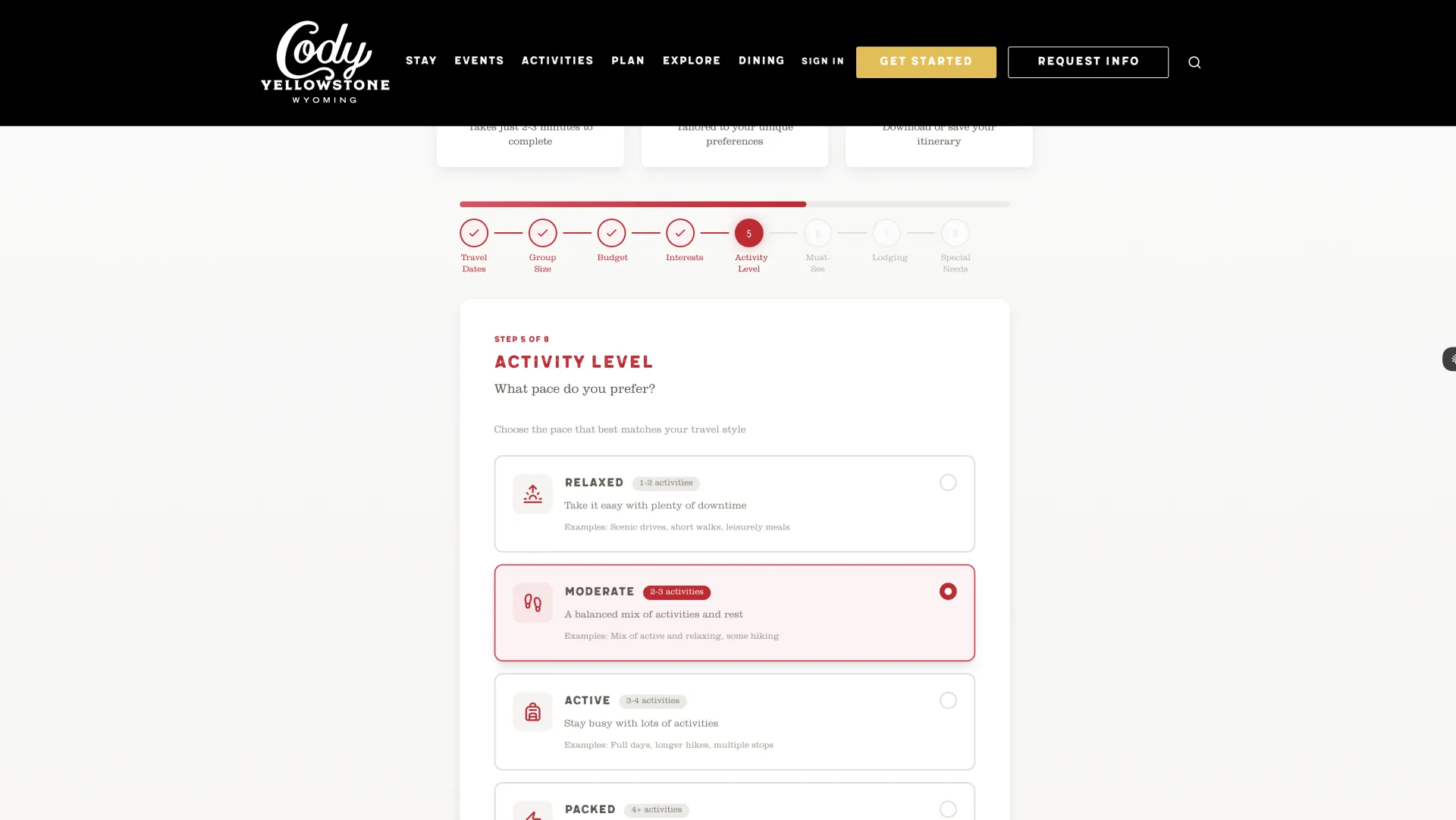
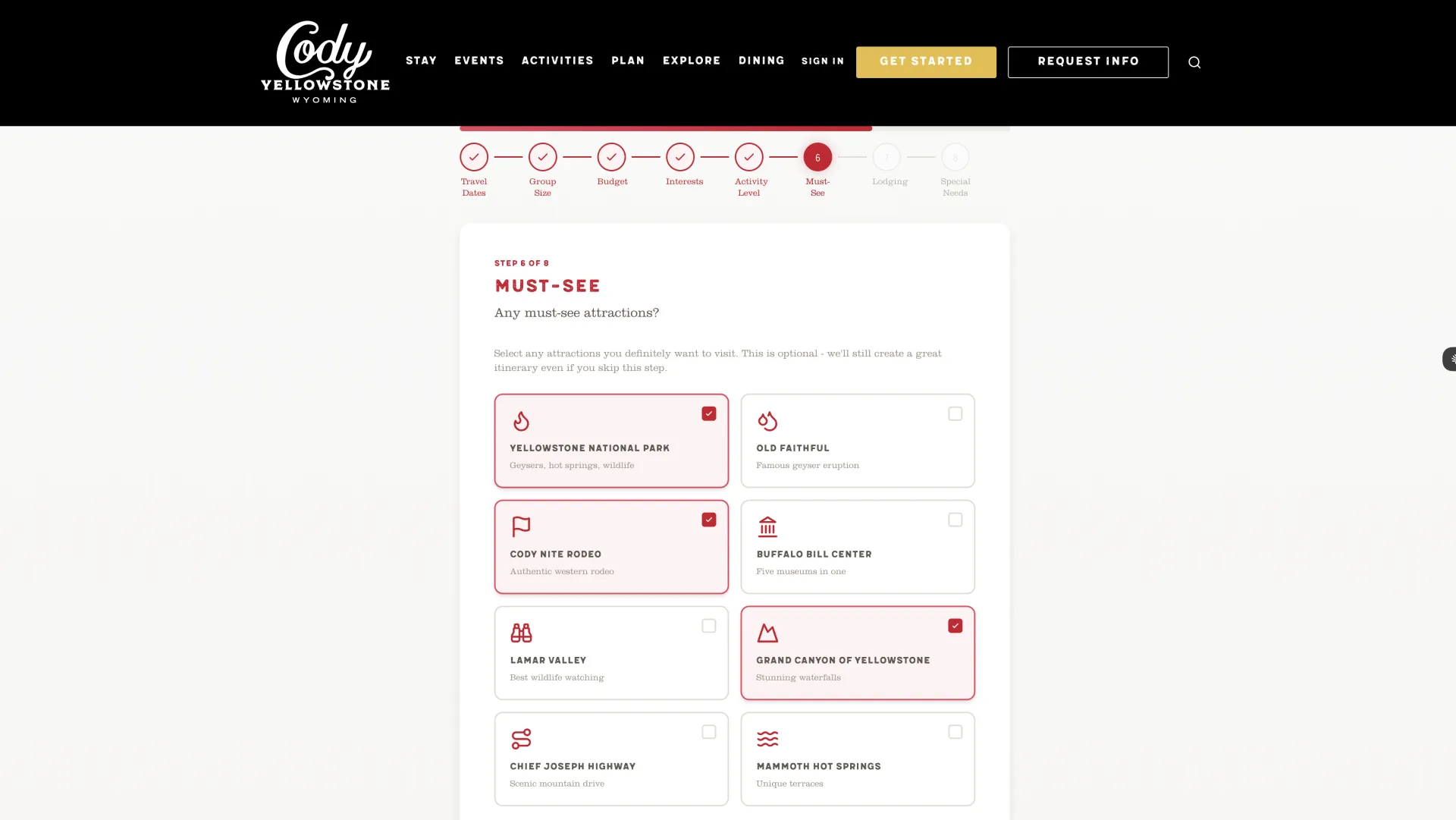
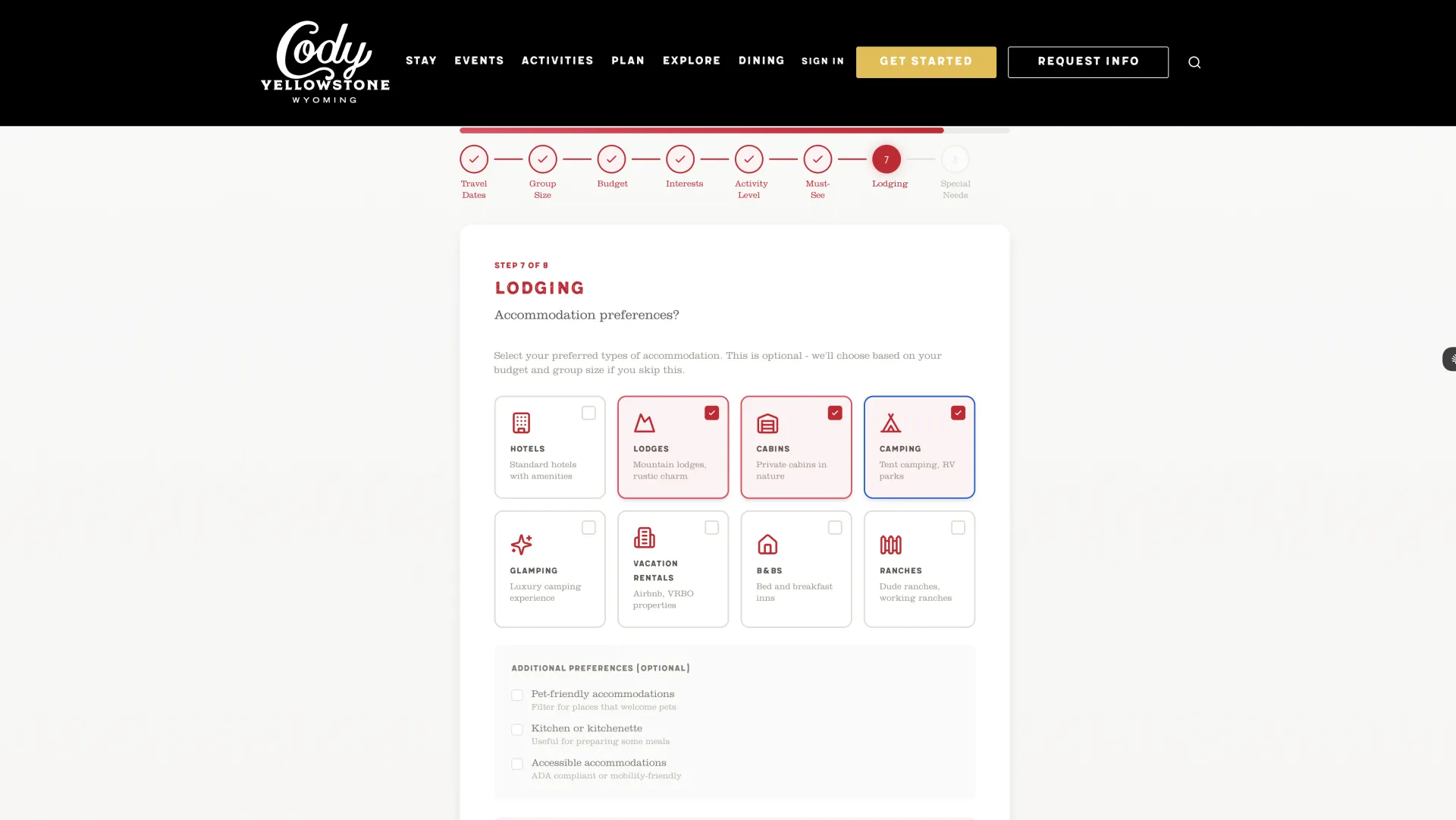
- Personalized itineraries — not a generic “top 10 things to do” list, but a real plan keyed to the traveler’s dates, budget, interests, activity level, must-see priorities, and lodging preferences
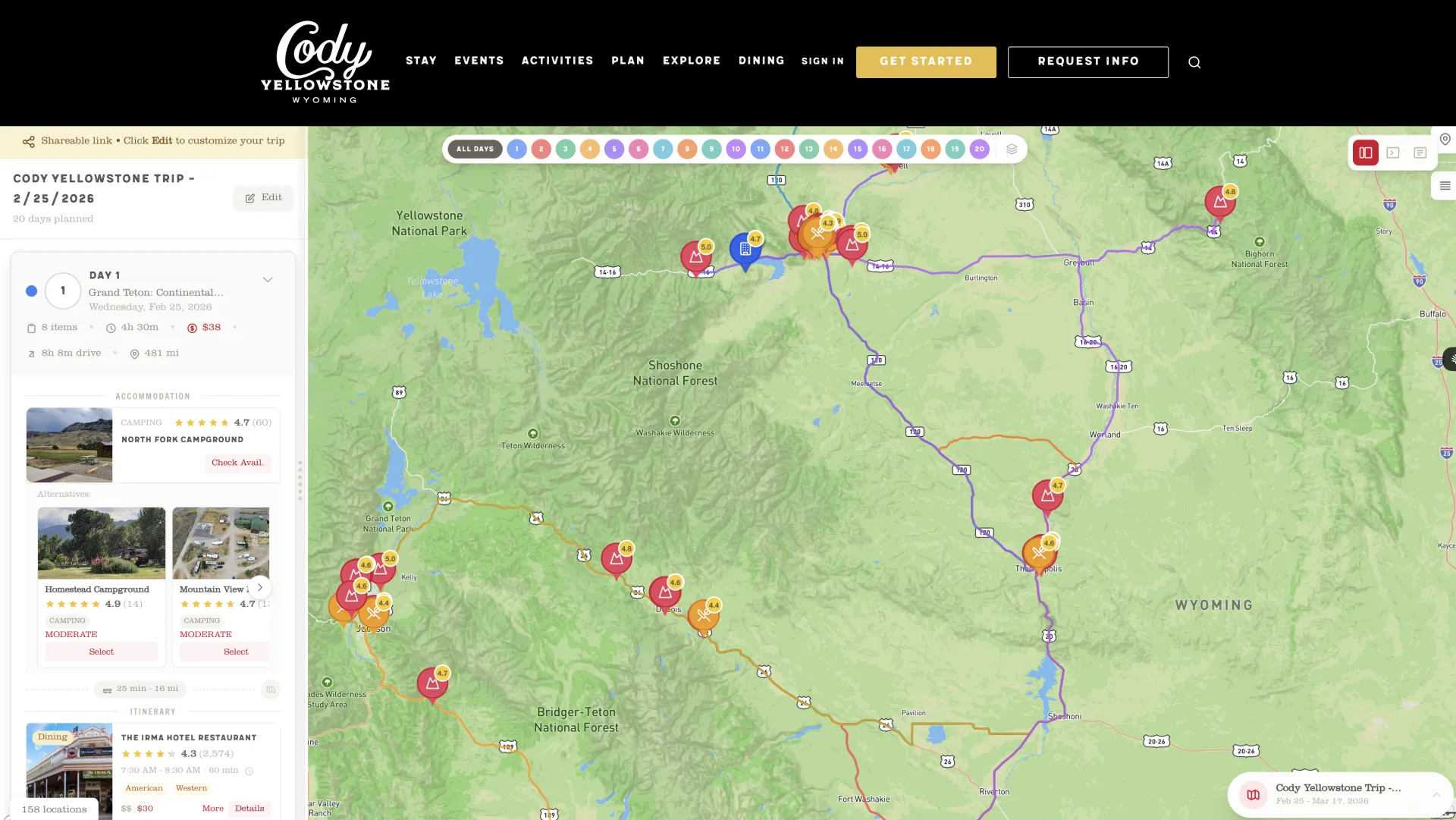
- Visual, map-first output — Yellowstone is a place, not a checklist, and the experience needed to feel like one
- Real integrations — weather, mapping, points of interest — not a static brochure dressed up with AI buzzwords
- Production-quality demonstration — something the board could see, click through, and evaluate honestly, not a slide deck describing what something might look like
The traditional path to answering that hypothesis is well-trodden and slow. A traditional development agency would scope the build at 8 to 12 weeks across discovery, design, frontend, backend, integration, QA, and deployment — billing $40K to $80K for the privilege of finding out whether the idea was worth pursuing in the first place. DIY AI tools (Lovable, Replit, Bolt) can spin up a passable demo in an afternoon, but they hit a ceiling fast on real third-party integrations, custom data models, and anything resembling production deployment.
For a DMO making a board-level decision, neither path is good. Spending a quarter of calendar time and most of an annual technology budget to evaluate a hypothesis is the kind of decision that doesn’t get made — which is precisely why most DMOs are still publishing PDFs.
The strategic question OneChair was hired to answer: Could a real, integration-rich, board-ready AI product be shipped in a single working day?